
- All
- Product Name
- Product Keyword
- Product Model
- Product Summary
- Product Description
- Multi Field Search
English
Views: 0 Author: Site Editor Publish Time: 2026-10-02 Origin: Site


Unplanned downtime in high-pressure, high-temperature textile processing directly erodes profit margins. You lose money through wasted energy, ruined batches, and idle labor. Operating at temperatures exceeding 130°C and elevated pressures accelerates wear on mechanical seals, heat exchangers, and pressure vessels. Reactive maintenance leads to inconsistent liquor ratios, dye spotting, and catastrophic equipment failure. When a machine fails mid-cycle, you lose the fabric batch. You also waste the thermal energy used to heat the dye bath and the labor hours spent draining, cleaning, and resetting the system. Implementing a structured, proactive maintenance protocol for your machinery shifts operations from reactive firefighting to predictable, high-yield production. This approach extends the lifecycle of critical assets. It ensures every dye cycle meets strict quality control standards. By moving away from a run-to-failure model, textile plants stabilize utility consumption and protect their workforce from pressure-related hazards.
Component Degradation: Continuous exposure to harsh chemicals and extreme heat requires strict monitoring of mechanical seals, circulation pumps, and heat exchangers to prevent pressure drops.
Quality Correlation: Routine dyeing machine maintenance directly impacts polyester fabric dyeing consistency by ensuring precise temperature control and stable liquor ratios.
Machine-Specific Nuances: Maintenance protocols must be adapted to the specific equipment type, whether operating Jet, Soft Flow, Beam, or Vertical Yarn dyeing systems.
Phased Maintenance ROI: Transitioning to a comprehensive multi-stage maintenance schedule reduces unplanned outages by up to 60% and ensures compliance with pressure vessel safety standards.
Repair vs. Replace: Evaluating aging HTHP dyeing equipment is critical; persistent heat exchanger scaling or structural vessel fatigue often justifies capital upgrades over continuous repairs.
Defining the financial and operational metrics of a well-maintained machine establishes the baseline for production success. Right-First-Time (RFT) dyeing rates serve as the primary indicator of machine health. When equipment functions correctly, RFT rates remain high. This means fabrics require no shading, stripping, or re-dyeing. Secondary metrics include utility consumption per kilogram of fabric and overall machine availability. A degraded system consumes excessive steam to reach target temperatures and requires longer cycle times. This directly reduces the daily throughput of the dyehouse.
Fluctuating temperatures and pressure leaks have an immediate, severe impact on polyester fabric dyeing. Synthetic fibers require stable, high temperatures to open their polymer structures and accept disperse dyes. If a faulty steam valve or a fouled heat exchanger causes temperature drops during the exhaustion phase, dye uptake becomes uneven. Thermal instability also accelerates oligomer buildup. Oligomers are short-chain polymers that migrate to the surface of polyester fibers under high heat. Without precise temperature control and rapid, controlled cooling, these oligomers crystallize. They deposit a sticky white powder on the fabric and the internal walls of the machine. This leads to severe color spotting and shading defects.
Compromised valves and worn mechanical seals create hidden resource inefficiencies. These disrupt the low liquor ratio advantages of modern machines. A leaking drain valve or a failing bypass seal allows heated process water to escape continuously. The machine's level sensors detect the fluid loss and trigger automated top-offs with cold water. This forces the heat exchanger to work harder to recover the lost temperature. You waste massive amounts of thermal energy and dilute the dye bath concentration. Over time, these undetected leaks destroy the chemical equilibrium of the process. The result is pale shades and massive water waste.
Operational Metric | Reactive Maintenance Impact | Proactive Maintenance Impact |
|---|---|---|
Right-First-Time (RFT) Rate | Drops below 85% due to thermal instability. | Consistently exceeds 95%. |
Utility Consumption | High steam and water waste from hidden leaks. | Optimized usage matching OEM specifications. |
Equipment Lifespan | Frequent component failure shortens life to 10 years. | Extends operational life to 15-20 years. |
Labor Efficiency | High overtime costs for emergency repairs. | Predictable scheduling during planned downtime. |
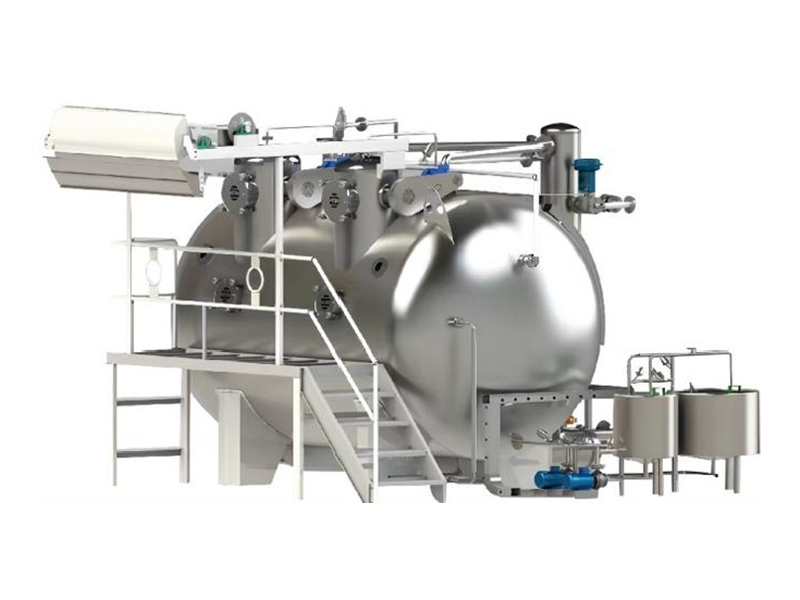
Understanding the architecture of a high temperature high pressure dyeing machine is necessary for executing effective maintenance. These machines are complex assemblies of pressure vessels, fluid dynamics systems, and thermal transfer units working in unison under extreme conditions.
The main kier, door seals, and safety interlocks form the primary pressure boundary. The kier undergoes continuous thermal cycling. It expands and contracts with every batch. This mechanical stress tests the integrity of the welds and the locking ring mechanisms. Door O-rings, typically made from Teflon or Viton, degrade over time due to chemical exposure and physical compression. Safety interlocks prevent the door from opening while the vessel is pressurized. They require strict calibration to prevent fatal operator accidents.
Main circulation pumps handle high-viscosity dye liquors at extreme temperatures. This makes them highly vulnerable to mechanical failure. The mechanical seals on these centrifugal pumps prevent pressurized, boiling dye liquor from leaking into the motor housing. If the pump operates with a low Net Positive Suction Head (NPSH), cavitation occurs. Cavitation bubbles implode against the pump impeller. This physically pits the metal and destroys the pump's efficiency. Regular vibration analysis and seal inspections prevent these catastrophic pump failures.
Heat exchangers function as both heaters and coolers. They dictate the cycle times of the entire operation. Scaling from hard water, combined with chemical fouling from unexhausted dyes and oligomers, coats the internal tubes of the heat exchanger. This insulating layer drastically reduces thermal transfer efficiency. A fouled heater extends the time required to reach 130°C. It bottlenecks production and alters the dye exhaustion curve.
Precise pneumatic and electronic valve calibration ensures accurate dye and auxiliary chemical injection. Dosing systems rely on flow meters and proportional valves to introduce chemicals at specific rates. If a pneumatic actuator fails or a valve seat degrades, chemicals dump into the main kier too rapidly. This causes localized over-dyeing and unlevelness across the fabric batch.
Jet and Soft Flow Machines: Synchronization checks between winch reels and nozzles are mandatory. If the winch pulls the fabric faster than the liquor flow from the nozzle, the fabric experiences high tension. This leads to pilling and elongation. If the nozzle flow outpaces the winch, the fabric tangles in the storage chamber, creating permanent crease marks.
HTHP Beam Dyeing Machines: Inspection of perforated beams prevents blockages that disrupt uniform liquor penetration. If the perforations clog with lint or un-dissolved dye particles, the liquor flow channels through the path of least resistance. This leaves large sections of the fabric roll completely undyed.
Vertical Yarn/Cheese Dyeing Systems: Alignment and cleaning of spindle carriers ensure consistent dye flow through yarn packages and tops. A bent spindle or a damaged locking cap allows the pressurized liquor to bypass the yarn packages entirely. This results in unlevel dyeing between the inside and outside of the yarn cheese.
Breaking down the maintenance lifecycle into a comprehensive, multi-stage protocol prevents common mechanical failures and stabilizes production output. Proper dyeing machine maintenance must be categorized by frequency and operational impact.
Maintenance Stage | Frequency | Critical Tasks | Target Component |
|---|---|---|---|
Stage 1: Pre-Cycle | Every Batch | Loading verification, visual O-ring inspection, safety clamp checks. | Main Kier Door, Safety Interlocks |
Stage 2: Daily Operator | Once per Shift | Monitor pressure/temp baselines, clean main filters and lint traps. | Sensors, Filtration Systems |
Stage 3: Weekly Preventive | Weekly | Lubricate pump bearings, inspect pneumatic lines and steam traps. | Circulation Pumps, Pneumatics |
Stage 4: Monthly Calibration | Monthly | Descale dosing tanks, test automated dosing accuracy. | Heat Exchangers, Dosing Valves |
Stage 5: Bi-Annual Overhaul | Every 6 Months | Ultrasonic thickness testing, PLC sensor calibration. | Pressure Vessel, Control System |
Stage 6: Annual Rebuild | Yearly | Teardown and rebuild of mechanical seals, NDT of welds. | Main Pumps, Kier Welds |
During Stage 1, proper loading verification prevents unbalanced batches that cause severe tangling and mechanical strain on the winch motor. Visual inspection of door O-rings and locking rings ensures the primary pressure seal remains intact before introducing high-temperature steam. Operators must physically check the alignment of the safety clamps.
Stage 2 relies on daily operator protocols. Operators must monitor pressure gauges and temperature sensors for baseline deviations during the dye bath and holding phases. A sudden pressure drop indicates a failing seal. Sluggish temperature climbs point to steam issues. Post-cycle rinsing and cleaning of main filters and lint traps prevent cross-contamination between dark and light shades. This also stops oligomer buildup from choking the circulation pump.
Stage 3 involves weekly preventive tasks executed by the mechanical team. Lubrication of pump bearings and winch motor drives prevents friction-induced failures. Inspection of pneumatic air lines, steam traps, and exhaust valves ensures that the utility inputs required for heating and pressurization function without leaks. Mechanics should listen for hissing air lines and check for water pooling around the machine base.
Stage 4 focuses on monthly system calibrations. Descaling of dosing tanks, chemical feed lines, and internal heat exchanger tubes restores thermal efficiency and prevents chemical blockages. Testing of automated dosing accuracy and liquor ratio control sensors guarantees that the physical fluid levels match the parameters programmed into the controller.
Stages 5 and 6 represent deep, invasive maintenance. Non-destructive testing (NDT) of pressure vessel welds and ultrasonic thickness testing detect metallurgical fatigue before a catastrophic rupture occurs. The complete teardown and rebuild of main circulation pump mechanical seals reset the lifespan of the most critical moving part. Finally, the calibration of all Programmable Logic Controller (PLC) sensors and automation software updates keep the machine's digital brain synchronized with its mechanical hardware.
Providing diagnostic frameworks for frequent operational faults allows technicians to link machine performance directly to textile output. Often, the fabric itself acts as the most accurate diagnostic sensor in the dyehouse. Reverse-engineering machine issues based on output accelerates troubleshooting.
Analyze Crease Marks: Crease marks running lengthwise along a synthetic fabric indicate a winch and nozzle speed mismatch in a jet dyer. Adjust the VFD settings to synchronize the mechanical pull with the hydraulic flow.
Inspect Uneven Yarn Packages: When the core of a yarn package is lighter than the exterior, it points directly to spindle blockages or insufficient pump pressure. Clean the carriers and verify the pump impeller is not worn.
Investigate Color Spotting: Dark, concentrated dots of dye usually point to heat exchanger scaling flaking off during the cycle. It can also indicate a failing dosing valve that injected dye too rapidly. Descale the heat exchanger and calibrate the dosing system.
Pressure drops during dyeing cycles require step-by-step isolation of the root cause. Technicians must first check the main door gaskets for visible steam leaks. If the door is secure, the fault likely lies in leaking steam exhaust valves or compromised pneumatic seals within the air pad system. An air pad system uses compressed air to maintain static pressure above the liquor level. If the air inlet valve fails to hold pressure, the entire vessel depressurizes. This causes the dye liquor to boil violently and tangle the fabric.
Temperature inconsistencies disrupt the entire chemical process. Diagnosing these faults begins at the heat exchanger. Tube blockages from scale or lint reduce the surface area available for heat transfer. If the heat exchanger is clean, technicians must inspect the steam traps. A steam trap blowing through live steam fails to transfer latent heat to the process water. Alternatively, degraded Resistance Temperature Detector (RTD) sensors may send false low readings to the PLC. This causes the system to over-pressurize the steam valves and scorch the fabric.
Liquor ratio imbalances directly affect shade depth and chemical concentration. Identifying hidden internal leaks is the first step. Worn bypass valves or leaking heat exchanger tubes allow process water to escape into the drain or the steam condensate return line. Inaccurate level transmitters, often fouled by dye residue, trick the PLC into adding unnecessary fill water. This dilutes the dye bath and alters the final color yield.
Establishing a framework for deciding when maintenance is no longer economically viable prevents factories from pouring resources into obsolete machinery. Evaluating aging systems requires calculating the cumulative impact of spare parts consumption, lost production time, and energy inefficiencies against the capital expenditure of modern equipment.
Retrofitting legacy systems offers a middle ground for extending equipment life. Assessing the viability of upgrading PLCs allows older machines to integrate with modern dyehouse management software. This improves dosing accuracy and cycle tracking. Installing variable frequency drives (VFDs) on main circulation pumps drastically reduces electrical consumption. VFDs allow the pump speed to match the specific density and flow requirements of different fabric types. Replacing outdated heat exchangers on older machines can temporarily restore thermal efficiency and help achieve lower liquor ratios.
However, identifying critical failure points dictates when a factory must replace its textile factory equipment. Metallurgical fatigue in the main kier is irreversible. Decades of expanding and contracting under 130°C heat weaken the stainless steel structure. Once ultrasonic thickness testing reveals that the vessel walls have thinned beyond safety tolerances, no amount of maintenance can secure the machine. At this point, you must invest in a new HTHP dyeing machine. Similarly, when proprietary controllers become obsolete and OEM spare parts are no longer manufactured, the risk of extended downtime mandates the purchase of new, high-efficiency HTHP dyeing equipment.
Operating high-pressure systems carries inherent life-safety risks that demand strict adherence to legal and engineering standards. These machines function as massive pressure cookers. A structural failure at peak temperature results in an explosive release of boiling chemical liquor and steam.
Navigating pressure vessel certifications is a mandatory legal requirement. Facilities must comply with ASME (American Society of Mechanical Engineers) Boiler and Pressure Vessel Codes, PED (Pressure Equipment Directive) in Europe, or equivalent local standards. These regulations require annual inspections by certified third-party engineers. Inspections include hydrostatic testing. During this test, the vessel is filled with water and pressurized beyond its normal operating limit. This verifies structural integrity without the risk of pneumatic explosion.
Establishing standard operating procedures (SOPs) for safe loading, depressurization, rinsing, and chemical handling protects the workforce. Operators must be trained to never bypass safety interlocks. Depressurization procedures must be followed sequentially. Opening a sample valve or a main door before the internal pressure gauge reads zero and the temperature drops below 85°C can cause severe thermal burns.
Test Relief Valves: Manually actuate pressure relief valves weekly to ensure they vent excess pressure automatically if the PLC fails.
Verify Emergency Cooling: Test automated emergency cooling protocols monthly. They should trigger immediately if the system detects an uncontrolled temperature spike.
Document Safety Audits: Maintain routine safety audit documentation. This ensures all safety mechanisms are functional, inspected, and legally compliant.
Conduct an immediate baseline audit of all pressure vessels, including ultrasonic thickness testing of the main kier and heat exchanger shells.
Review historical downtime logs to identify recurring mechanical failures and adjust your spare parts inventory accordingly.
Establish a rigid multi-stage preventive maintenance calendar that assigns specific daily, weekly, and monthly tasks to operators and mechanical technicians.
Train all machine operators on daily visual inspections, proper post-cycle rinsing procedures, and strict adherence to safety interlock protocols.
A: The standard lifespan averages 15 to 20 years. This duration depends heavily on water quality, the harshness of the chemicals used, and strict adherence to preventive maintenance schedules. Poor water quality accelerates scaling, while reactive maintenance drastically reduces the operational life of the pressure vessel and main pumps.
A: Mechanical seals typically require replacement every 12 to 18 months. However, pumping abrasive dyes, heavy oligomer concentrations, or allowing the pump to run dry due to cavitation can drastically shorten this timeframe. In severe cases, seal failure can occur in a matter of weeks.
A: Pressure loss during the holding phase is usually caused by worn main door gaskets, leaking steam exhaust valves, or failing pneumatic seals within the air pad system. If the air inlet valve fails to maintain static pressure above the liquor level, the vessel will slowly depressurize.
A: Scaling acts as an insulator, significantly reducing heat transfer efficiency. This extends heating times, which alters the standard dye exhaustion rate. The resulting thermal instability causes uneven color distribution, pale shades, and heavy oligomer deposits on the surface of the synthetic fabric.
A: Mandatory safety checks include daily visual inspections of locking rings and door seals. You must also perform weekly functional testing of pressure relief valves and safety interlocks. Annual ultrasonic thickness testing of the main pressure vessel is required to detect metallurgical fatigue and ensure compliance with safety codes.
A: Jet machines require strict synchronization checks between the winch reel and the nozzle to prevent high tension and fabric damage. Yarn or Cheese dyeing machines lack a winch. They require meticulous spindle alignment and carrier cleaning to ensure uniform, unobstructed liquor flow through the yarn packages.
A: Yes, retrofitting is feasible by adding internal plaiters, modifying the kier bottom to reduce dead volume, and upgrading circulation pumps with Variable Frequency Drives (VFDs). However, factories must carefully weigh the engineering costs and expected efficiency gains against the capital expenditure of purchasing modern equipment.


