
- All
- Product Name
- Product Keyword
- Product Model
- Product Summary
- Product Description
- Multi Field Search
English
Views: 0 Author: Site Editor Publish Time: 2026-01-14 Origin: Site


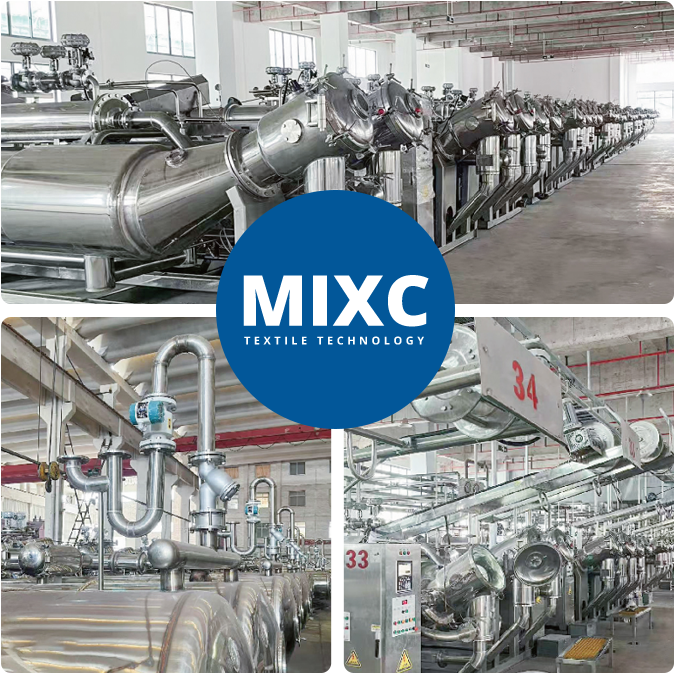
Dyeing machines are the heart of the wet processing industry. They control the interaction between fabric, water, heat, and chemicals to ensure that dyes penetrate fibers evenly. However, for textile manufacturers and mill managers, understanding these machines goes beyond just color quality. The right machine influences production costs, energy consumption, and environmental sustainability.
In this guide, we will explore the fundamental principles of how dyeing machines operate. We will break down the mechanics behind the four most common types-Jet, Beam, Jigger, and Winch-and help you understand which technology is best suited for different fabric needs.
At its simplest, a textile dyeing machine is a vessel designed to bring textile materials into contact with dye liquor. However, in modern manufacturing, it is much more than a simple container. It is a sophisticated piece of equipment capable of controlling temperature, pressure, and circulation with high precision.
The primary role of a dyeing machine is to facilitate diffusion. Unlike printing, which applies color to the surface of a fabric, dyeing requires the colorant to penetrate the fiber structure itself. The machine ensures that every inch of the fabric receives the same amount of thermal energy and chemical exposure, preventing patchiness or shade variation.
Regardless of the specific type, all batch dyeing machines operate on the same core concept: Mass Transfer. The goal is to move dye molecules from the water (the liquid phase) into the fiber (the solid phase).
To achieve this, the machine must manage four critical elements:
The Material: The fabric, yarn, or fiber being dyed.
The Liquor: The mixture of water, dyes, and auxiliary chemicals (like leveling agents or pH buffers).
Temperature: Heat is required to swell the fibers and allow the dye to enter.
Movement: Relative motion between the fabric and the liquor is essential to ensure fresh dye reaches the fabric surface constantly.
The primary difference between machine types is how they generate this movement.
Fabric Circulation: The fabric moves through a stationary bath (e.g., Jigger, Winch).
Liquor Circulation: The fabric sits still, and pumps force the liquid through it (e.g., Beam, Package).
Combined Circulation: Both the fabric and the liquid move (e.g., Jet Dyeing).
While machinery varies, a standard dyeing operation follows this sequence:
Loading: The fabric is inserted into the vessel.
Filling and Heating: Water and chemicals are added. The machine heats the liquor to a specific starting temperature.
Dye Circulation: The dye is introduced. The machine raises the temperature (often to 130°C for polyester or 60–90°C for cotton) at a controlled rate (e.g., 2°C per minute).
Fixation: The temperature is held steady for 20 to 60 minutes. This is when the dye migrates into the fiber core.
Cooling and Rinsing: The machine cools down the bath and drains the spent liquor. Fresh water is cycled in to wash away unfixed dye.
Unloading: The wet fabric is removed for drying and finishing.
Different fabrics have different physical properties. You cannot treat a delicate silk chiffon the same way you treat a heavy cotton canvas. Over decades, engineers have developed specific machines to handle these variations. Here are the four most common types.
The jet dyeing machine is considered the modern standard for synthetic fabrics, particularly polyester. It is a closed-vessel system that operates at high temperatures and high pressures (HTHP). Its defining feature is that it moves the fabric using the force of water, rather than mechanical reels, which drastically reduces tension on the fabric.
In a jet machine, the fabric is sewn into a loop and processed in a “rope” form (bunched together rather than spread flat).
The Venturi Nozzle: The heart of this machine is a venturi tube—a ring-shaped nozzle with a constriction. A powerful centrifugal pump forces dye liquor through this nozzle at high velocity.
Fabric Transport: As the fabric rope passes through the venturi, the sheer force of the water stream pushes the fabric forward. There is no drive reel pulling the fabric, which minimizes stretching.
Turbulence and Penetration: The high-speed jet creates significant turbulence. This agitation forces dye into the fibers very quickly, resulting in excellent color uniformity.
The Cycle: After passing through the nozzle, the fabric travels slowly through a long transport tube at the back of the machine before returning to the jet to start the cycle again.
Because jet machines use a low liquor ratio (meaning less water per kg of fabric), they are energy-efficient and faster than older methods. They are the top choice for texturized polyester and microfiber fabrics.
Beam dyeing is an “open-width” method. Unlike the jet machine where fabric is bunched into a rope, beam dyeing keeps the fabric completely flat. This is essential for delicate warp knits or lightweight fabrics that might crease or crack if crushed into a rope.
The principle here is stationary fabric and moving liquid.
Preparation: The fabric is tightly and neatly wound onto a large, perforated metal cylinder (the beam). Uniform winding tension is critical here; if the winding is too tight or too loose, the dye won’t pass through evenly.
Pressurization: The loaded beam is slid into a horizontal cylindrical vessel (the autoclave). The door is locked, and the vessel is pressurized.
Inside-Out Flow: A high-performance pump forces the hot dye liquor into the center of the beam. The pressure pushes the liquid out through the perforations, through the layers of rolled fabric, and into the main tank.
Reversible Flow: To ensure evenness, the pump can reverse direction, pulling liquid from the tank, through the fabric, and back into the center of the beam.
Because the fabric does not move, there is zero mechanical friction. This makes beam dyeing the preferred method for lightweight synthetic fabrics used in lingerie, swimwear, and linings.
The Jigger (or Jig) is one of the oldest dyeing technologies, yet it remains indispensable for woven fabrics. It is an open-width dyeing machine designed for cotton, linen, and viscose blends. Unlike the jet or beam machines, the Jigger exerts considerable lengthwise tension on the fabric, making it unsuitable for stretchy knitted fabrics.
The Jigger operates on a reel-to-reel basis.
The Setup: The machine has two main rollers situated above a dye trough. The fabric is wound entirely onto one roller.
The Pass: The fabric unspools from the first roller, dips down into the small dye trough at the bottom, and re-spools onto the second roller.
The Process: Once the entire length of fabric has passed from roller A to roller B, the drive mechanism reverses. The fabric now passes back through the dye bath from roller B to roller A.
Low Liquor Ratio: Because the fabric only dips into the trough briefly, the Jigger requires very little water compared to the amount of fabric it holds.
Pressure rollers squeeze the fabric as it exits the bath, ensuring the dye solution is absorbed evenly. Modern automatic Jiggers have precise tension controls to minimize the stretching effect, but the basic principle of passing fabric back and forth through a stationary bath remains the same.
The Winch (sometimes called a Beck) is a traditional machine that processes fabric in rope form. While less common in modern high-speed production due to high water consumption, it is still valued for processing delicate woolens, spun yarns, and carpets where fabric “hand” (softness) is a priority.
The machine consists of a large vat with a curved back and an elliptical reel (the winch) located above the water line.
The Loop: Like the jet machine, the fabric is sewn into an endless loop.
The Action: The winch reel rotates, lifting the fabric rope out of the dye bath and dropping it back into the rear of the tank.
The Soak: The fabric piles up in the back of the tank and slowly slides forward through the dye liquor until it is lifted by the reel again.
High Liquor Ratio: The fabric is immersed for most of the cycle. This requires a high ratio of water to fabric (often 1:20 or higher).
The mechanical action is very gentle, relying on gravity and the slow rotation of the reel. This allows the fabric to relax and bulk up, giving wool and carpets a luxurious feel that is hard to replicate with high-pressure machines.
Selecting the correct machine is a balancing act between quality, cost, and fabric capability. Here are the main factors to consider:
Fabric Construction: This is the most critical factor.
Knits: require low tension to prevent elongation. Jet dyeing is usually best.
Wovens: Can withstand tension but need to be crease-free. Jiggers are ideal for cotton wovens; Beam dyeing is best for synthetic wovens.
Wool/Delicates: Need a gentle touch. Winch dyeing allows for bulking and softness.
Production Volume: Continuous dyeing is best for massive runs (10,000+ meters). For smaller, custom lots, batch machines (Jet, Jigger) are necessary.
Cost and Sustainability:
Jet and Beam machines generally use less water and energy, making them more sustainable and cheaper per kilo of fabric.
Winch machines use significant amounts of water and steam, increasing operational costs.
Quality Requirements: If the fabric surface is sensitive to abrasion (like peach-skin textures), a Beam machine is safer than a Jet machine, which tumbles the fabric.
Machines achieve evenness (levelness) through the regulation of three factors: controlled heating rates (so dye doesn’t rush in too fast), constant circulation of the liquor or fabric, and the use of leveling chemicals that slow down the dye absorption.
The Jet Dyeing Machine is the industry standard for polyester. Polyester requires high temperatures (around 130°C) to dye effectively. Jet machines are sealed pressure vessels that can safely reach these temperatures while keeping the fabric moving to prevent creases.
Both process fabric in rope form, but the Winch pulls fabric mechanically using a reel (high tension, low speed, high water use), while the Jet pushes fabric using a stream of water (low tension, high speed, low water use). Jet dyeing is generally faster and more modern.
If a machine pulls the fabric too hard (high tension), the fabric can stretch permanently, distorting the weave or knit structure. This results in a garment that doesn’t fit correctly. Machines like Jets and Beams are designed to minimize this tension.
Yes. Modern machines, specifically low-liquor-ratio Jet machines and airflow dyeing machines, consume significantly less water and steam than older Jiggers or Winches. This reduces the volume of wastewater that needs treatment, lowering the environmental footprint.
The dyeing machine is a marvel of industrial engineering, transforming raw, gray fabric into the colorful textiles we use every day. Whether it is the high-velocity turbulence of a Jet machine or the gentle, rhythmic motion of a Winch, each piece of equipment utilizes specific principles of mass transfer and fluid dynamics to achieve the perfect shade.
For manufacturers, the key to success lies in matching the machine principle to the fabric type. Using a Jigger for a delicate knit will ruin the fabric, just as using a Winch for a high-volume polyester run will ruin the budget. By understanding how these machines work, textile professionals can ensure they produce high-quality, cost-effective, and sustainable products.
Boost productivity, reduce costs, and achieve consistent, vibrant results with MIXC’s advanced high-temperature and soft-flow dyeing machines.
Whether you’re producing cotton, polyester, nylon, or blended fabrics, our energy-efficient solutions deliver reliable performance for modern textile manufacturing plants. With years of industry experience, user-friendly designs, and global support backed by a “Quality First, Reputation First” ethos, MIXC is your trusted partner for textile dyeing excellence.


