
- All
- Product Name
- Product Keyword
- Product Model
- Product Summary
- Product Description
- Multi Field Search
English
Views: 0 Author: Site Editor Publish Time: 2026-03-17 Origin: Site


Why do some fabrics dye evenly while others develop streaks, tension marks, or uneven shades during processing? A jet Overflow Dyeing Machine is designed to solve that problem by combining gentle overflow circulation with jet-assisted liquor flow in one system. This design helps move fabric smoothly, improve dye penetration, and maintain more stable shade development across the full dyeing cycle. For modern dyehouses, it also supports better fabric protection, cleaner handling, and more flexible production across knitted, woven, elastic, and blended materials. In this article, you will learn what a jet overflow dyeing machine is, how it works, and why many mills use it to improve dyeing quality and efficiency.
A jet overflow dyeing machine is a hybrid form of Overflow Dyeing Machine technology. A standard overflow system relies on liquor flow to carry fabric softly through the machine. A jet overflow design adds a nozzle-driven stream that gives extra force to the liquor. This added motion improves circulation and helps dye move deeper into the fibers. The result is a system that keeps the gentle character of overflow dyeing while adding stronger process support. For many mills, it offers a more balanced solution for quality dyeing across a wider fabric range.
Fabric handling is one of the biggest reasons buyers choose this machine type. In a jet overflow design, the fabric travels in rope form and stays in close contact with the dye liquor through the full cycle. The overflow movement reduces harsh pulling, while the jet function helps keep the fabric open and moving. This lowers the risk of stretching, flattening, or rough mechanical stress. It is especially useful when processing soft knits, stretch fabrics, or premium materials that need stable transport. In daily production, that gentle motion often leads to cleaner dyeing and better fabric feel.
Today’s dyehouses need flexibility, repeatability, and strong quality control. That is where the jet overflow machine stands out. It fits well in operations that handle multiple fabric types, smaller batch changes, and high appearance standards. It is often used where producers need both fabric protection and dependable dye uptake. Compared with simpler systems, this machine supports modern process goals more effectively. It serves mills that want to improve output quality without giving up efficiency. In that sense, the Overflow Dyeing Machine with jet support has become a practical choice for competitive textile finishing lines.
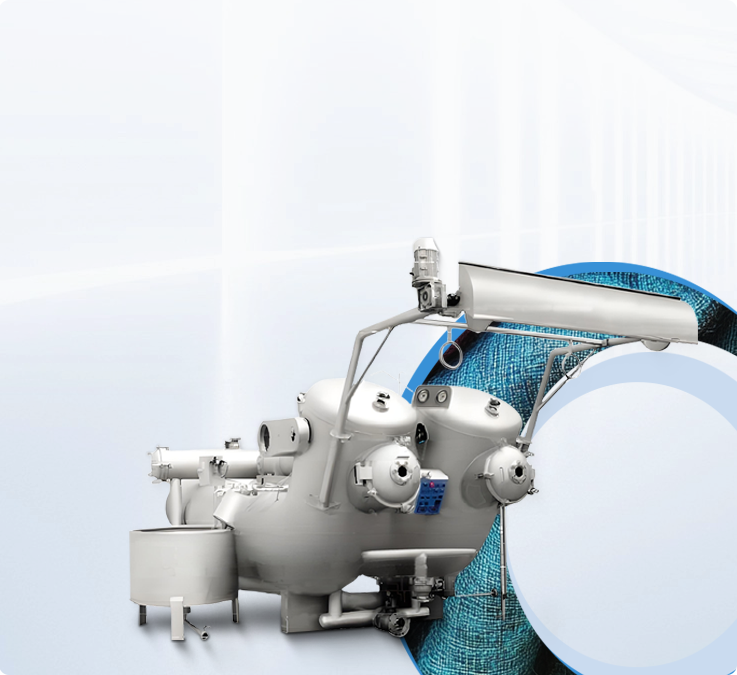
The process begins when dye liquor is pumped through the system and guided to flow over the inner path of the machine. This overflow creates a stable stream that carries the fabric slowly and evenly. Instead of depending on strong mechanical pulling, the machine uses the liquor itself as a transport medium. That helps maintain low tension and smooth circulation. Because the fabric remains fully exposed to the dye bath, contact stays consistent throughout the run. In a well-designed Overflow Dyeing Machine, this steady movement supports even wetting, safer handling, and a more controlled dyeing environment.
The jet section adds energy to the process. At the overflow point, a nozzle sends dye liquor at higher speed, creating a focused stream that improves circulation and pushes dye more effectively into the fiber structure. This added force helps loosen the fabric rope and reduces the chance of tangling or uneven movement. It also improves the exchange between dye liquor and fabric surface during each pass. That is one reason jet overflow systems are valued in quality dyeing. They combine the softness of overflow transport with the active penetration support of jet flow in one machine body.
Even color does not come from one pass alone. It comes from a controlled loop of circulation, jet impact, heat control, and stable fabric transport, where each parameter supports repeatable shade development and low-tension handling.
| Cycle Element | What Happens in the Cycle | Technical Basis | Typical / Reported Parameter Range | Application Value | Key Control Point | Practical Note |
|---|---|---|---|---|---|---|
| Fabric circulation mode | Fabric runs continuously in rope form through a closed tube and returns for repeated exposure to fresh dye liquor. | Continuous circular movement improves contact frequency between fabric and dye liquor. | Continuous loop process; dyeing cycle reported as 1.5–2.5 h for overflow jet machines. | Helps reduce local shade variation from one fabric zone to another. | Keep circulation stable before heating and dosing. | A stable loop matters more than raw speed alone. |
| Overflow liquor contact | Dye liquor is pumped upward and overflows along the inner wall, carrying fabric gently and keeping it immersed. | Overflow flow creates low-tension transport and uniform wetting. | Low-tension overflow transport; suitable bath ratio often reported at 5:1–8:1 or 1:6–1:8 depending on model and fabric. | Promotes full wetting, which is essential before deep shade build-up starts. | Maintain full immersion and stable liquor path. | Poor initial wetting often shows later as unlevel dyeing. |
| Jet impact stage | A high-speed nozzle adds kinetic energy and pushes liquor into the fabric structure during each pass. | Jet impact improves liquor exchange and dye penetration into fibers. | Reported nozzle pressure: 0.3–0.5 bar for lightweight fabrics; 1.2–1.5 bar for heavyweight fabrics. | Improves penetration and helps avoid pale zones or surface-only coloration. | Match nozzle pressure to fabric weight. | Pressure that is too low weakens circulation efficiency; pressure selection must follow fabric class. |
| Nozzle sizing | The rope passes through a nozzle sized to the wetted rope diameter. | Proper nozzle sizing prevents over-compression and keeps transport smooth. | Reported nozzle diameter guidance: ≤Ø50 mm for 50–150 g/m² fabrics; Ø60–70 mm for 150–400 g/m²; ≥Ø100 mm for ≥400 g/m² fabrics. | Supports even movement, which directly supports even dye uptake. | Nozzle ID must be larger than the fully wetted rope-folded diameter. | Undersized nozzles increase compression and can disturb shade uniformity. |
| Fabric speed and liquor exchange | Each cycle refreshes the liquor at the fabric surface and renews dye contact. | Repeated fresh-liquor exposure supports level dyeing and reproducibility. | General jet machine fabric velocity reported up to 200–500 m/min; actual setting depends on machine design and fabric type. | More uniform liquor renewal helps avoid stagnant dye zones. | Balance circulation energy with fabric stability. | Use reported speed as machine capability, not a universal setpoint for every article. |
| Active and passive phases | Fabric alternates between a faster jet-driven phase and a slower return phase around the system. | This two-phase movement supports both penetration and relaxation. | Two principal phases are described for jet-based systems: active jet passage and passive return movement. | Helps combine strong dye-liquor interaction with gentler overall handling. | Keep transition between phases smooth. | Levelness improves when neither phase becomes erratic. |
| Circulation stabilization before main dyeing | The machine is run at low speed first so the rope path settles before heat-up or dosing begins. | Stable early circulation reduces mechanical and shade variation later in the cycle. | Reported stabilization time: about 10 min before heating or chemical dosing. | Creates a stable baseline for repeatable dyeing. | Do not rush into chemical dosing before circulation is smooth. | This step is especially useful for lightweight or stretch-sensitive fabrics. |
| Temperature control during circulation | Heating is introduced gradually while circulation remains balanced. | Temperature, movement, and chemistry must stay coordinated for even dye fixation or exhaustion. | Reported temperature range: 130–135°C for lightweight fabrics; 135–140°C for heavyweight fabrics; some processes repeat at 135°C for 20–30 min. | Supports cleaner shade development and batch reproducibility. | Avoid rapid heating or cooling. | Thermal shock can disturb fabric behavior and hurt levelness. |
| Liquor ratio effect | Low liquor ratio keeps the dyebath compact while preserving effective circulation. | Lower bath volume improves heating efficiency and increases dye-fabric interaction density. | Reported liquor ratio ranges include 1:5, 1:5–1:7, 1:5–1:8, 1:6–1:8, and broader jet ranges up to 1:20 depending on design generation. | Supports faster response, lower water use, and more efficient dyeing. | Confirm the real liquor ratio under your actual load, not just catalog data. | Reported ratios vary by machine generation and fabric loading method. |
| Dyeing cycle efficiency | Overflow + jet action shortens the process compared with overflow-only circulation. | Stronger penetration plus dual circulation increases mass transfer efficiency. | Reported cycle reduction of 15%–20% versus pure overflow machines. | Higher productivity without losing levelness. | Validate on your own fabric mix. | Useful for mills comparing upgrade ROI across machine types. |
| Tension control and shade reproducibility | Fabric is transported mainly by liquor energy, not aggressive pulling alone. | Reduced tension helps keep the rope relaxed and dye contact more uniform. | Machine is described as low-tension; suitable for knits, stretch-sensitive fabrics, and lightweight to medium-weight fabrics. | Better reproducibility from batch to batch, especially on sensitive constructions. | Balance nozzle pressure and lifting wheel speed. | Excessive wheel speed can overstretch fabric; too little can cause piling. |
| Monitoring instruments | Operators track temperature, pressure, fabric speed, and shade during the cycle. | Real-time monitoring improves process repeatability. | Reported instruments include thermometer, pressure gauge, metering wheel, and a simple shade-check device. | Supports scientific control instead of visual guesswork alone. | Record real production data by fabric style. | Reproducibility improves when settings are tied to verified batch history. |
A pure overflow machine is known for gentle fabric transport, especially on delicate or elastic materials. A jet overflow model keeps that benefit but adds more active liquor movement. This extra force improves dye penetration and can shorten the process compared with a standard overflow-only system. It also helps support better circulation in fabrics that need stronger liquor exchange. So while both belong to the Overflow Dyeing Machine family, the jet overflow version usually offers broader process capability. It gives mills a way to maintain softness and fabric care while improving operational efficiency and dyeing response.
A standard jet dyeing machine uses strong liquor force as the main driving power. That can be effective for many materials, but it may apply more stress than some premium fabrics need. Jet overflow machines add the overflow element, which softens the handling profile and reduces the overall tension on the fabric. This makes them more attractive for stretch, knit, and high-value goods that benefit from gentler circulation. They still offer strong dye interaction, but in a more balanced way. That balance is why many textile producers view them as a smart middle ground in machine selection.
The value of the combined design lies in what it avoids and what it improves. It avoids overly passive circulation that may slow penetration, and it avoids overly aggressive transport that may affect fabric appearance. Instead, it blends soft movement and active liquor exchange into one system. For mills, that often means better shade consistency, better hand feel, and more reliable processing across different product categories. A jet overflow machine is not just a mix of two methods. It is a process platform built to deliver quality, flexibility, and efficiency together in a modern Overflow Dyeing Machine format.
| Machine Type | Fabric Handling | Dye Penetration | Typical Use Focus |
|---|---|---|---|
| Pure Overflow Dyeing Machine | Very gentle | Moderate | Delicate and elastic fabrics |
| Standard Jet Dyeing Machine | More forceful | Strong | Faster processing on selected fabrics |
| Jet Overflow Dyeing Machine | Gentle but active | Strong and balanced | Wide fabric range with quality focus |
Knitted fabrics respond well to low-tension processing because they can distort easily under harsh movement. That makes a jet overflow machine a strong fit for sportswear fabrics, jersey, interlock, rib, and other elastic constructions. The overflow flow carries the fabric gently, while the jet supports better dye exchange without heavy pulling. This helps protect recovery, drape, and surface quality. For mills dyeing stretch-based products, an Overflow Dyeing Machine with jet support often helps maintain both shade quality and physical performance. It is a useful solution when fabric softness and elasticity are important selling points.
Premium fabrics often need stable handling more than aggressive movement. Materials such as fine knits, wool blends, cashmere-like fabrics, and silk-touch constructions benefit from the softer circulation profile of a jet overflow system. The fabric stays in close contact with the dye liquor but avoids rough traction during the process. That supports cleaner surface appearance and helps preserve the natural hand feel that buyers expect in higher-end goods. For brands and mills focused on value-added textiles, this machine type supports both quality control and commercial positioning. It protects the fabric while still delivering strong dyeing performance.
Woven and blended fabrics can also benefit from this machine type, especially when they need more complete dye liquor exchange. Cotton-poly blends, polyester-viscose materials, and medium-weight woven fabrics often require balanced circulation for better shade development. The jet action helps dye reach the fiber structure more effectively, while the overflow side keeps movement more stable. That combination supports uniform penetration across mixed constructions and varied yarn behavior. For dyehouses handling a broad product mix, the machine adds flexibility without sacrificing control. It is one reason many operations use this style of Overflow Dyeing Machine as a multi-purpose production asset.
One of the clearest advantages is color levelness. Because the fabric passes through repeated, well-controlled liquor contact, the machine helps reduce streaks, patchiness, and uneven shade build-up. The jet function improves penetration, while the overflow movement supports full wetting and stable circulation. Together, they create a more uniform dyeing path for the full batch. This is especially important in commercial production where reproducibility affects cost, delivery, and customer trust. A modern Overflow Dyeing Machine with jet action gives mills more control over final shade results, which is critical for both bulk orders and quality-sensitive products.
Fabric quality is not only about color. It is also about touch, shape, elasticity, and surface condition after processing. Jet overflow systems support these goals by reducing unnecessary fabric stress during movement. Instead of relying on hard traction, they use liquor movement as the main carrier. That helps preserve loft in knits, maintain stretch in elastic goods, and protect the natural feel of soft fabrics. In many cases, better handling leads to fewer appearance defects and a more premium final product. For manufacturers, that means stronger quality outcomes from the same dyeing stage.
Modern buyers often look at efficiency and sustainability together. Many jet overflow systems are built with low liquor ratio designs, which can help reduce water use, chemical load, steam demand, and total process cost. Some references suggest ratios around 1:5 to 1:8 in selected applications, though exact values should be verified based on fabric and machine design. Less liquor also means faster heating and better resource use through the full cycle. For mills under pressure to improve environmental performance, this type of Overflow Dyeing Machine can support both production goals and sustainability targets in a very practical way.
The nozzle is one of the most important parts of the machine because it converts pump energy into directional liquor force. Its size, shape, and flow pattern influence how the fabric moves, how strongly the liquor circulates, and how well dye penetrates the material. If the nozzle is matched correctly to fabric type and rope size, the machine tends to run more smoothly. It can also adapt better across light and medium fabric weights. In practical terms, the nozzle and liquor path form the real working engine of the Overflow Dyeing Machine, so they deserve close attention during selection and setup.
A well-performing machine depends on more than nozzle pressure alone. The lifter reel helps coordinate fabric transport and keeps the circulation path stable through the full process. When reel speed and liquor force are balanced, the fabric remains suspended naturally and moves without visible tension or piling. If that balance is lost, dyeing stability can suffer. That is why experienced operators focus on the interaction between liquid traction and mechanical support rather than on one setting by itself. Good transport control helps protect the fabric and supports consistent dyeing results over repeated batches.
Automation has become a major advantage in newer machines. Intelligent controls help operators manage temperature ramps, dosing speed, process timing, and cycle consistency with better precision. Heat exchange systems improve heating and cooling efficiency, while controlled dosing supports smoother chemical addition. Together, these features make production easier to repeat and easier to optimize. They also reduce the chance of variation caused by manual differences from batch to batch. For many buyers, these supporting systems are what turn a good machine into a dependable production tool. They strengthen the long-term value of the full dyeing platform.
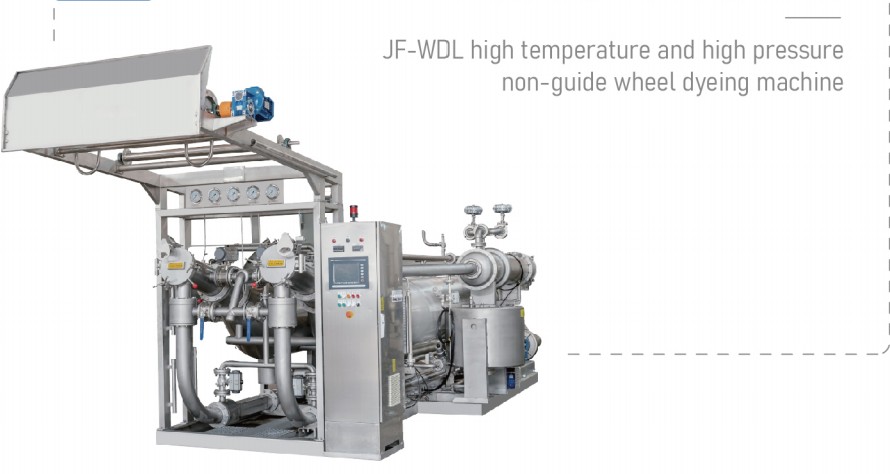
The right machine should fit the products you actually run, not just the machine specifications on paper. Start by reviewing your main fabric categories, weights, elasticity, surface sensitivity, and quality targets. A mill focused on athletic knits may need one setting range, while a mill handling blended woven goods may need another. Product positioning matters too. If you serve premium customers, gentle handling and shade reproducibility will likely matter more. Choosing an Overflow Dyeing Machine that matches your fabric profile helps improve utilization, quality stability, and return on investment from the first stage of installation.
Once the fabric range is clear, look closely at practical operating factors. Liquor ratio affects water and energy use, but automation level affects day-to-day repeatability and labor efficiency. Processing flexibility is also important, especially for mills with changing orders and shorter runs. A strong machine should handle recipe adjustments, fabric variation, and multiple processing demands without major disruption. Buyers should also review heating performance, dosing logic, and circulation stability in real operating terms. These details shape how the machine performs after purchase. They often matter more than broad marketing claims in long-term production planning.
A machine purchase is a process decision, not only an equipment decision. The best choice supports stable color quality, fabric protection, efficient resource use, and smooth maintenance over time. It should also come from a supplier that can offer process guidance, parts support, and application knowledge. For many mills, that service side affects results just as much as hardware design. Long-term operating value comes from consistent output, lower waste, and easier process control. When evaluating a jet overflow system, look for the combination of technical fit, supplier reliability, and future production flexibility.
A jet overflow dyeing machine is a practical upgrade for modern dyehouses because it combines the gentle fabric handling of an Overflow Dyeing Machine with the stronger dye penetration of jet technology in one efficient system. This design helps mills achieve more even color results, lower fabric tension, smoother circulation, and better process control across knitted, elastic, delicate, woven, and blended fabrics. It also supports better resource use by improving dyeing consistency and reducing unnecessary waste during production. For textile manufacturers that want stable quality and flexible performance, this machine offers clear long-term value. Wuxi Mixc Textile Technology Co., Ltd. stands out by providing jet overflow dyeing solutions designed for reliable operation, fabric-friendly processing, and practical production needs. With strong equipment performance and professional service support, the company helps customers improve dyeing quality, increase efficiency, and build a more competitive and future-ready textile finishing operation.
A: It combines overflow flow and jet force for gentle, even dyeing.
A: It improves shade levelness, fabric care, and process efficiency.
A: It moves fabric in rope form with low tension and stable circulation.
A: For many fabrics, it offers gentler handling and balanced penetration.
A: Capacity, automation, liquor ratio, controls, and supplier support.
A: Match nozzle pressure, fabric type, and temperature control carefully.


