
- All
- Product Name
- Product Keyword
- Product Model
- Product Summary
- Product Description
- Multi Field Search
English
Views: 0 Author: Site Editor Publish Time: 2026-03-24 Origin: Site


Color uniformity says a lot about process control in modern Overflow Dyeing Machines. When shade stays even from end to end and batch to batch, it shows that the mill is managing temperature, circulation, dosing, fabric preparation, and machine condition with care. When shade drifts, costs rise quickly through re-dyeing, delayed delivery, and unstable quality. In most cases, the root causes are not random. They usually come from a few repeat issues, such as an unstable dyeing curve, weak liquor movement, poor pH control, uneven chemical addition, inconsistent pretreatment, or machine residue. In this article, you will learn how to identify these causes and fix them with a clear troubleshooting path.
In Overflow Dyeing Machines, the dyeing curve often decides whether dye strikes evenly or too fast. If the temperature rises too quickly, the dye can rush onto the fabric surface before migration has enough time to smooth out local differences. That raises the risk of patchy or barre-like shade, especially in reactive and disperse systems where temperature strongly affects dye-fiber interaction. A better first step is to compare the actual machine curve against the approved recipe curve, then check whether the rate changed during production, maintenance, or controller updates.
Correct holding time is just as important as the heating rate. In many dye classes, dye uptake, migration, and fixation do not happen at the same speed. If the process reaches the target temperature but does not hold long enough, the bath may not reach a stable equilibrium. The result is often uneven depth across the rope or from lot to lot. Review the dwell time at wetting, dye uptake, fixation, and wash-off stages, then compare it to the approved lab recipe and machine log. Small cuts in hold time can create visible shade variation.
Cooling is often treated as a minor step, but it influences final appearance more than many teams expect. Wool dyeing references note that cooling and draining help stop migration and lock in the shade, and the same process logic matters broadly in exhaust dyeing: uncontrolled cooling can shift dye distribution and change the final look after rinsing and soaping. If fabric leaves the machine too hot, or cooling is uneven, the shade may look stable in-bath but drift after finishing. In troubleshooting, review the cooling slope, drain timing, rinse temperature, and final pH before judging the recipe.
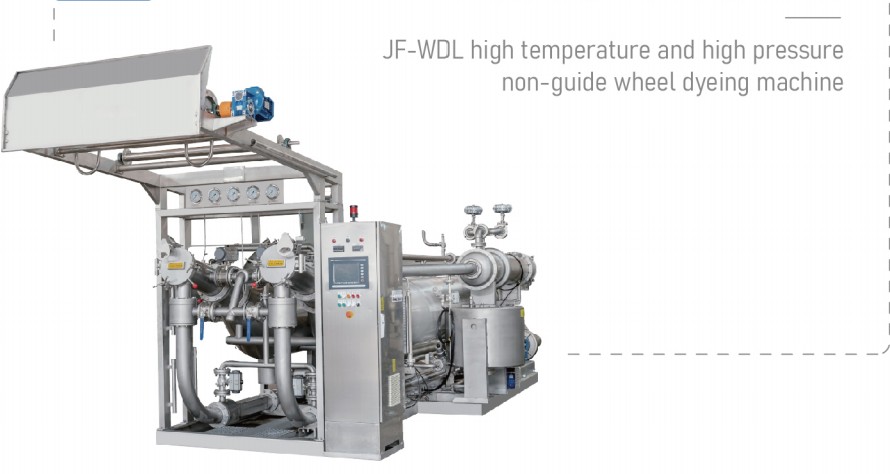
Stable circulation is the real engine behind level dyeing. When nozzle setting, pump output, and liquor exchange stay aligned, the rope sees a more even thermal and chemical environment. That is why experienced teams check the hydraulic side first, then compare it against fabric style, load, and real machine response. The figures below combine commonly cited jet/overflow operating ranges and machine-spec checkpoints used in practice.
| Inspection area | What to verify | Practical application in troubleshooting | Reference value / technical indicator | Why it matters for color uniformity | Attention notes |
|---|---|---|---|---|---|
| Nozzle pressure | Whether the jet force is within the machine’s controllable range | Read the nozzle pressure gauge during circulation, then compare it with the approved setting for the fabric style and GSM | Example adjustable nozzle pressure range: 0.2–2.4 bar(g) on modern jet systems | Too low reduces propulsion and liquor penetration. Too high may disturb rope stability and increase surface stress | Judge pressure together with nozzle opening and fabric behavior, not as a stand-alone number |
| Nozzle opening | Whether the nozzle gap matches fabric weight and rope bulk | Confirm the programmed setting, then physically inspect if the nozzle gap was changed during the previous lot or maintenance | Example nozzle adjustment range: 0.2–10 mm | The gap changes the pressure-flow balance. A small gap raises jet force. A larger gap gives softer flow | Record the setting by article type. Reusing one gap for all fabrics often causes instability |
| Nozzle size | Whether the installed nozzle diameter fits the article being dyed | Check nozzle size against the machine record and fabric category before starting the batch | Example nozzle diameter options: 120 / 140 / 168 / 220 mm | Wrong nozzle size can distort liquor delivery and rope transport behavior | Keep nozzle selection linked to fabric GSM, structure, and required transport softness |
| Main circulation pump output | Whether the pump is delivering enough liquor to sustain steady exchange | Review pump current, flowmeter reading, and circulation response at normal operating temperature | Example main circulation flow: 100–120 m³/h per J-box; pump power 7.5 kW per J-box on one commercial jet design | Weak pump output can create uneven liquor renewal across the rope, especially on heavier loads | Flow loss may come from wear, cavitation, clogged filters, or bypass leakage |
| Flow distribution to each nozzle | Whether multi-nozzle systems are receiving equal flow and pressure | Compare readings between nozzles and inspect the distribution manifold after the heat exchanger | Some systems use a multi-spreading system to equalize flow and pressure to each nozzle | Unequal distribution can make one rope dye deeper or circulate faster than another | On multi-rope machines, balance between nozzles is as important as total pump output |
| Rope cycle time | Whether the fabric completes one full circulation quickly and consistently | Time several rope cycles during stable running and compare them across the batch | A complete rope cycle should generally be 1–2 min and must not exceed 2 min | Longer or unstable cycle time increases dwell variation, folding risk, and uneven dye contact | Measure actual cycle time under load, not only at idle or during water trial |
| Fabric transport speed | Whether rope speed matches machine type and fabric sensitivity | Verify inverter setting and observe whether rope motion is smooth, jerky, or slipping | Reported machine examples include 0–450 m/min winch control, 400–600 m/min high fabric speed in jet systems, and 600–800 m/min on some turbo designs | Unstable speed changes exposure time and folding behavior, which can show up as end-to-end or patchy variation | Use the approved speed window for the article. Higher is not always better |
| Liquor ratio | Whether the bath volume is appropriate for the load and machine design | Compare actual liquor volume and fabric weight with the planned recipe before heating starts | Jet machines typically run around 8:1, and some designs go as low as 4:1; one modern jet example lists a working liquor ratio of 1:4 | Liquor ratio affects dye concentration, circulation stability, and chemical distribution | Low liquor ratio saves water, but it also raises the need for better dissolution and tighter flow control |
| Load vs. circulation capacity | Whether the batch size is too high for stable exchange | Check actual batch weight, rope width, and fabric type against the machine’s hydraulic capacity | Loading capacity depends on maximum liquor volume and liquor ratio; rope width and weight affect the usable load | Overloading slows exchange, weakens penetration, and makes folding less even | Use separate internal standards for light knits, dense knits, and woven ropes |
| Filter cleanliness | Whether the return line and suction side are partially blocked | Inspect filter differential pressure if available, then open and check residue load during shutdown | No universal numeric limit was found across all machines, so mills should use maker-specific pressure-drop limits and cleaning intervals | Blocked filters reduce flow and create unstable nozzle performance | Always compare post-cleaning and pre-cleaning pump behavior in the same recipe |
| Return flow condition | Whether liquor is returning smoothly without restriction, foam surge, or dead zones | Observe return turbulence, drain behavior, and any sign of delayed recirculation after chemical addition | Use machine-specific flowmeter trend and visual return stability; some machines integrate flowmeters as standard | Poor return flow delays bath homogenization and may create local concentration differences | After adding dyes, salts, or alkali, confirm that the return stream stabilizes quickly |
| Heat exchanger support to circulation | Whether the circulation loop is keeping heating and cooling responsive | Check if the bath reaches the programmed ramp rate under normal load | Example heating capacity: 5 °C/min; cooling capacity: 3 °C/min on one jet design | If circulation weakens, real heat transfer weakens too, which can shift dye uptake behavior | Slow ramp response can indicate both heat exchanger fouling and hydraulic loss |
| Flow direction option | Whether the machine is using the right circulation mode for the article | Review whether the process is set for forward, counterflow, or reverse flow where available | Some soft-flow/jet systems are designed to work in counterflow and reverse flow modes | Direction control can help maintain smoother fabric transport and more even liquor contact | Keep the flow mode fixed within a validated recipe unless the process sheet says otherwise |
| Machine feedback tools | Whether operators are reading the right control points during troubleshooting | Use the built-in flowmeter, pressure gauges, inverter readings, and warning system together | Example integrated tools include flowmeter, pressure gauges, error warning system, and inverter-controlled speed adjustment | Uniformity issues are easier to trace when hydraulic data is logged, not guessed | Trend data from a good batch is often the best benchmark for a bad batch |
Tip:When shade variation appears, time the rope cycle first, then compare nozzle pressure, flow rate, and liquor ratio in the same batch. Those three checks usually reveal whether the issue is hydraulic, loading-related, or recipe-related.
Color uniformity in Overflow Dyeing Machines also depends on how smoothly the rope travels. If the fabric speed is unstable, turnover time becomes uneven, and one part of the rope may stay longer in a hotter or more concentrated zone. Entanglement, poor opening, and rope crowding all weaken levelness. This is why operators should watch more than just the shade panel. They should also record rope travel behavior, dwell rhythm, and any stop marks during the cycle. When movement is smooth, the dyeing result usually becomes smoother too.
Overloading is a common and preventable cause of uneven shade. When the machine carries too much fabric, liquor exchange slows down, penetration becomes less even, and circulation paths become crowded. The dye bath may still look correct on paper, yet the fabric cannot receive it uniformly in practice. In troubleshooting, check the real load against the machine’s operating range for that fabric weight and structure. A batch size that works for one knit style may not work for another. Correct loading improves levelness, reproducibility, and first-pass success.
pH control is one of the most important checks when troubleshooting uneven shade. Fiber-reactive dyes need the right pH window to begin reaction, and process references show that pH below neutral gives little reaction while alkaline conditions drive fixation. If pH drifts too early, strike may become fast and uneven. If it drifts too late, fixation can weaken and shade depth may vary. That is why mills should test pH during the run, not only at the start. Inconsistent pH often explains why two “same” batches still dye differently.
In reactive dyeing, salt and alkali are not simple add-ons. They shape how the dye leaves the bath, moves into the fiber, and then fixes. Cotton dyeing references note that reactive systems use salt as a dyeing assistant, while alkali triggers the reaction with cellulose. If either is added too fast, local concentration spikes can push the dye to strike before it has fully leveled. Stepwise addition helps keep exhaustion more even across the rope. If shade looks patchy, one of the first audits should be the timing, dilution, and sequence of salt and alkali dosing.
A recipe can be correct in the lab and still fail in production if machine dosing does not match it. This is a common gap in Overflow Dyeing Machines. Pumps may lag, stock solutions may not be mixed fully, and dosing tanks may feed at a different speed than expected. Even undissolved dye particles can create spots or local depth variation. So the audit should move beyond the printed recipe and check the real addition event: dilution level, feed time, filter condition, solution temperature, and whether the dyes were strained before entry. Execution quality is often where bulk dyeing wins or loses.
Before blaming the machine, check the fabric. Poor pretreatment is a classic cause of blotches, streaks, and off-shade results. Cotton processing references explain that residual impurities left after weak scouring can lead directly to dye blotches, streaks, and spots. Oils, waxes, and other residues block wetting and reduce uniform absorbency. That means the dyebath is correct, but the fabric does not receive it evenly. A strong troubleshooting plan should therefore review pretreatment reports, absorbency, whiteness, and any carryover from storage before changing the dye recipe.
Even a stable machine cannot fully hide fabric inconsistency. Variations in yarn, blend ratio, finish, thermal history, or surface structure can all change dye uptake. Textile references on dyeing faults and polyester behavior both show that fiber variation and uneven preparation can create visible non-uniformity. In practice, the trouble often appears as one roll dyeing deeper, one side looking duller, or one lot responding faster than another. When this happens, compare the greige source, knitting or weaving history, finish level, and absorbency test results before making process changes.
Lot consistency matters more than many teams admit. If one batch enters the machine wetter, drier, wider, denser, or more compact than the lab standard, the bath-to-fabric relationship changes at once. That can shift initial wetting, liquor pick-up, circulation behavior, and final shade. UNIDO guidance on yarn dyeing also stresses the value of uniform package weight, which reflects the broader rule that material consistency supports dye consistency. In piece dyeing, this means checking lot identity, moisture level, GSM, width, and relaxation condition before loading the machine.
Machine cleanliness is a direct quality factor, not just a housekeeping issue. Dye fault studies repeatedly list colored spots, deposits, and machine residue as causes of uneven dyeing. If the machine is not cleaned fully after a dark shade or a chemically heavy lot, traces can re-enter the bath and mark the next fabric. Deposits can also collect at hidden points, then release later during circulation. A strong maintenance routine should focus on jets, bends, filters, tanks, seals, and low-flow corners where residue tends to stay. Clean metal surfaces support clean shade.
Uniform dyeing depends on uniform flow. If a valve sticks, a filter clogs, or a heat exchanger transfers heat unevenly, the bath stops behaving like one controlled system. One zone may run hotter, another may circulate slower, and the rope may feel different conditions during the same cycle. That is why mechanical inspection belongs inside shade troubleshooting. It should include flow restrictions, bypass leaks, scale buildup, and any sign that heat transfer or liquor return has become uneven. Stable circulation pathways help the whole dyeing profile stay stable.
A good recipe cannot save a poor reading. If temperature probes drift, timers lag, or dosing controllers respond late, the batch may follow a different process than the operator sees on screen. That leads to repeat shade issues that appear random but are really control errors. The safest approach is to verify sensor calibration, controller response, and data logging accuracy on a fixed schedule. Then, if a shade issue appears, compare the displayed values against independent checks. In Overflow Dyeing Machines, reliable control instruments are part of the dyeing process itself.
When the fabric looks darker at one end and lighter at the other, start by reviewing circulation rhythm, turnover time, and loading pattern. End-to-end variation often means the rope did not move through the machine under stable, repeating conditions. It can also point to poor liquor exchange or a late change in pH, temperature, or dosing. In these cases, the goal is not to test everything at once. It is to match the defect shape to the most likely process drift, then trace when it entered the cycle. Pattern-based troubleshooting is faster and more accurate.
Patchy or cloudy shade usually points to fast strike, uneven wetting, poor pretreatment, incorrect pH, or quick chemical addition. Barre-like appearance can also reflect substrate variation or uneven heat-setting history before dyeing. Textile dyeing studies list these causes again and again because they create local differences in absorbency and fixation. For this defect pattern, the best path is to inspect fabric preparation, dye solution quality, pH record, addition sequence, and rope movement before changing dye selection. It is a pattern that often has a process cause, not a color-matching cause.
When one batch dyes correctly and the next does not, the issue is often variation in execution. Water quality, pH, hardness, material condition, controller response, and real dosing behavior can all shift from lot to lot. AATCC notes that neutral pH and very low metals, hardness, and dissolved solids are ideal for textile wet processing, because water quality strongly affects dyeing and finishing. So if reproducibility fails, compare not only the recipe sheet, but also the water record, pretreatment report, lot condition, and machine log. Reproducibility comes from stable inputs and stable execution.
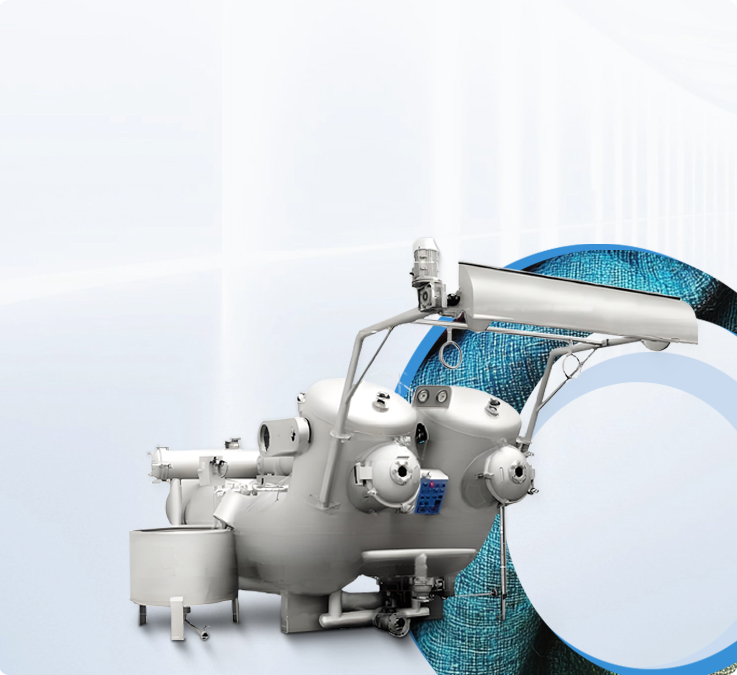
A strong pre-run routine turns color control into a repeatable process, not a last-minute correction. Before each lot enters Overflow Dyeing Machines, experienced mills verify fabric readiness, water condition, machine status, dosing accuracy, and loading discipline. The checks below focus on items that directly affect shade uniformity and that can be verified with plant records, instruments, and standard textile test methods.
| Checklist section | What to confirm before start-up | How to verify in practice | Reference value / technical indicator | Why it matters for color uniformity | Key attention notes |
|---|---|---|---|---|---|
| Lot identity | Fabric lot, shade lot, recipe code, and customer standard all match | Cross-check ERP card, lab dip approval, batch card, and machine program before loading | No universal numeric value; use one approved batch record per lot | Wrong lot or wrong recipe version can create avoidable off-shade results before dyeing even begins | Lock recipe release to one approved version only |
| Fabric absorbency after pretreatment | Fabric is properly scoured and ready for even wetting | Use AATCC TM79 or equivalent drop test before bulk dyeing | Good scouring can give water absorbency in ≤ 5 s on cotton fabrics in Cotton Incorporated guidance | Weak absorbency leads to uneven wetting, slower penetration, and local shade variation | Test each incoming style, not only new developments |
| Fabric moisture condition | Fabric moisture is reasonably consistent across the lot | Check conditioned fabric weight or internal moisture control record before loading | No universal single numeric limit found across all fabrics; mills should use style-specific internal limits | Uneven moisture changes initial liquor pick-up and early dye strike behavior | Compare actual lot condition to the lab standard used for recipe approval |
| Greige / prepared fabric consistency | GSM, width, construction, and lot source are consistent | Review inspection report and lot merge record before sewing ends | No universal numeric target; must match the approved production specification | Fabric variation often shows up as barre, side-to-side, or lot-to-lot shade difference | Do not mix lots unless validated in advance |
| Machine cleanliness | No residual dye, lint, alkali deposits, or contamination points remain in the system | Inspect tube path, nozzle area, filters, tank, drain points, and dosing tank after cleaning | No universal numeric value; use plant cleaning SOP and visual cleanliness release | Residue can re-enter the bath and create spots, streaks, or unexpected tone shift | Dark-to-light shade changeovers need stricter release checks |
| Sensor calibration | Temperature, pH, pressure, and flow-related instruments are within calibration status | Check calibration label, due date, and instrument response before starting the lot | Calibration interval is maker- and plant-specific; pH and dosing control units are identified as important for dyeing process control | A correct recipe cannot perform well if the displayed values are wrong | Verify critical instruments before problem shades and after maintenance |
| Water pH | Incoming process water is chemically stable and near neutral where required | Test fresh water before makeup and compare with plant standard | AATCC guidance for wet processing notes pH 7.0 as ideal for water used in textile wet processing contexts | Water pH can shift dye bath behavior, buffer demand, and fixation timing | Always check water at source, not only after the bath is prepared |
| Water hardness | Hardness is controlled to avoid metal and salt interference | Use plant water lab or inline monitoring before the batch | AATCC guidance cites ideal total hardness as 0 ppm for textile wet processing water | Hard water can affect auxiliaries, dye solubility, and reproducibility | When hardness rises, review sequestrant demand before dyeing |
| Iron content in water | Iron contamination is at a very low level | Review treated water report or rapid metal test | AATCC guidance cites ideal iron = 0.1 ppm | Iron can distort shade, stain fabric, and destabilize some dye systems | Check after maintenance or tank corrosion events |
| Manganese content in water | Manganese is tightly controlled | Verify via water analysis report | AATCC guidance cites ideal manganese = 0.01 ppm | Trace metals can create unpredictable shade variation and deposits | Use treated water records lot by lot for critical shades |
| Total dissolved solids in water | TDS stays within plant standard for dyeing | Use conductivity/TDS meter before batch preparation | AATCC guidance cites ideal TDS = 50 ppm | Excess dissolved salts can alter dyebath chemistry and reproducibility | Review TDS trend if the same recipe starts drifting across days |
| Stock dye solution readiness | Dyes are fully dissolved, filtered where needed, and labeled correctly | Confirm solution preparation log, concentration, temperature, and straining status before dosing | No universal single numeric value; follow dyestuff supplier dissolution temperature and concentration guidance | Poor dissolution can create local specks, streaks, and delayed shade development | Prepare stock fresh enough to avoid settling or hydrolysis loss |
| Auxiliary and alkali readiness | Salt, alkali, acid, leveling agents, and sequestrants are correctly prepared | Check make-up tank, concentration sheet, and dosing plan before loading | No universal single numeric value; must match approved recipe sheet exactly | Wrong make-up concentration changes the real addition rate even if the pump time looks correct | Label all solution tanks clearly and confirm transfer lines |
| Recipe version control | Machine program matches the approved lab-to-bulk recipe | Compare recipe revision number in the controller and physical batch card | No numeric limit; one approved revision only | Recipe mismatch is a common reason for unexplained batch variation | Freeze edits after approval unless formally reissued |
| Liquor ratio setting | Planned bath ratio matches machine, fabric style, and recipe basis | Verify programmed water volume and actual fabric weight before filling | Overflow/jet systems commonly operate in the range of 1:4 to 1:20, depending on machine type and process | Liquor ratio changes concentration, circulation response, and exhaustion behavior | Use the same liquor ratio basis as the lab approval |
| Load size approval | Batch weight fits machine hydraulic capacity and rope behavior | Confirm net fabric weight against machine loading standard and liquor volume | Loading depends on maximum liquor volume and liquor ratio; rope cycle must not exceed 2 min in the cited jet-dyeing reference | Excess load weakens circulation and increases dwell variation | Loading approval should be style-specific, not machine-generic |
| Nozzle and flow path status | Nozzle setting, filters, and return path are ready for stable circulation | Check nozzle condition, opening setting, and filter cleanliness during pre-start inspection | Some jet systems use adjustable nozzle pressure and geometry; exact range depends on maker specification | Stable hydraulic conditions support even liquor exchange from the first minute | Record nozzle settings by style and repeat them consistently |
| Programmed process path | Heating rate, hold time, dosing steps, and rinse path are loaded correctly | Run a control screen check before start and compare to the approved recipe profile | No single universal value; must match approved batch program | Many shade issues begin with the wrong process path, not the wrong dye | Review the entire sequence, not only the target temperature |
| Operator release | One responsible operator signs off the pre-run status | Use a signed checklist or digital release in the MES | No numeric value; one accountable release point per lot | A signed release reduces skipped steps and improves traceability | Use the same checklist format every batch for trend analysis |
Tip:For repeat shades, keep one “golden batch” checklist on file and compare every new lot against it before start-up. In practice, differences in water quality, absorbency, or actual load often appear there before they show up on the fabric.
Prevention works best when the team defines real control limits, not vague targets. For example, the mill can set acceptable bands for temperature rise, pH variation, bath preparation time, load size, and circulation checks. When a value moves outside that band, the team acts before a visible shade fault appears. Research and technical references agree on the key point: dyeing depends strongly on pH, temperature, electrolyte level, time, and material condition. Turning those variables into plant control limits makes shade stability far easier to manage.
A disciplined mill learns from each lot. Batch records should include the full process curve, not only the recipe. They should capture real addition times, pH checks, operator notes, fabric behavior, and any correction made during the run. Then, when a fault appears, the team can compare successful and unsuccessful lots and find the true difference. Trial corrections should be small, controlled, and documented. Over time, this turns troubleshooting into process knowledge. It also improves right-first-time performance, which is one of the strongest commercial benefits of well-managed Overflow Dyeing Machines.
Troubleshooting color uniformity in Jet Overflow Dyeing Machines works best when mills follow a clear order: dyeing curve, circulation, dosing, fabric preparation, machine condition, and defect pattern analysis. This method helps teams find real causes faster and reduce costly shade variation from batch to batch. In daily production, strong results come from stable control, accurate records, and consistent execution at every step. Wuxi Mixc Textile Technology Co., Ltd. creates value by providing reliable Overflow Dyeing Machines, practical technical support, and process-focused solutions that help mills improve color consistency, production efficiency, and right-first-time quality.
A: In Overflow Dyeing Machines, common causes include unstable temperature rise, weak circulation, poor pH control, uneven dosing, fabric inconsistency, or machine residue.
A: Start with the dyeing curve, then check circulation, dosing, fabric preparation, machine condition, and visible defect pattern.
A: Overflow Dyeing Machines show variation when water quality, load size, pH, or recipe execution changes between lots.
A: Use pre-run checks, stable settings, and accurate records to improve right-first-time dyeing.


