
- All
- Product Name
- Product Keyword
- Product Model
- Product Summary
- Product Description
- Multi Field Search
English
Views: 0 Author: Site Editor Publish Time: 2026-08-10 Origin: Site


Capital expenditure in wet processing equipment dictates a textile factory’s long-term operational efficiency, utility overhead, and product consistency. Relying solely on brochure specifications or initial purchase price when selecting equipment often leads to hidden integration costs, excessive water and energy consumption, and costly production downtime. Moving from a broad vendor search to a finalized procurement contract requires a rigorous, evidence-based evaluation framework. You need to look past the sales pitch and examine the mechanical realities of the machinery. This guide breaks down how to vet a Dyeing Machine Supplier based on engineering realities, utility demands, and post-installation support infrastructure. We will cover the exact technical parameters you must verify, the component sourcing you should demand, and the integration risks you need to mitigate before signing any purchase order.
Align Machine Specs with Production Reality: A reliable supplier will audit your specific batch capacities and fabric types (e.g., yarn vs. woven, jet vs. overflow) before recommending a system.
Validate Utility Claims: Do not accept stated liquor ratios or motor power efficiencies at face value; demand empirical data and case studies from similar operational environments.
Prioritize After-Sales Infrastructure: The true value of a textile machinery supplier lies in their Service Level Agreements (SLAs), spare parts availability, and commissioning expertise.
Before evaluating any equipment, you must define your exact production scale. Determine your minimum and maximum load requirements to avoid underutilization or overloading. Running a high-capacity machine with a small batch wastes water, thermal energy, and chemicals. Conversely, overloading leads to uneven dye penetration, pump cavitation, and severe fabric damage. You need to map out your daily tonnage and match it to specific vessel capacities.
Establish criteria for how the supplier handles capacity scaling. Ask whether they offer modular additions or if scaling requires full system replacements. A robust textile production solution should accommodate your current output while leaving room for projected growth over the next five years. You should also evaluate the physical footprint of the machines. Floor space in a dye house is expensive, and you need to ensure the proposed equipment fits within your existing drainage and utility trenches.
Consider the workflow of your dye house. If you run multiple small batches of different colors, you need agile machines with rapid drain and fill capabilities. If you run massive continuous batches of a single color, you need high-capacity vessels with heavy-duty circulation pumps. Document these requirements in a formal specification sheet before contacting any vendors.
Different substrates demand entirely different mechanical actions. Define your primary substrate clearly, whether it involves hanks, cones, delicate knits, or heavy wovens. Establish baseline requirements for yarn processing equipment. You must decide between hank or cone configurations based on your yarn type. Hank processing suits high-bulk, relaxed yarns like acrylic or wool. Package systems handle high-density processing for cotton or sewing threads.
For fabric processing, establish strict success criteria for material handling. The equipment must ensure tensionless transport, prevent crease marks, and eliminate surface abrasion. Require the supplier to justify their recommendation between Jet, Overflow, Beam, or Airflow systems. Their justification must align with your specific material matrix and daily process requirements. A jet machine uses high-pressure nozzles to drive the fabric, which works well for durable synthetics but will destroy delicate knits. An overflow machine uses a gentle cascade of liquor to move the fabric, protecting the surface finish.
Machine Type | Primary Application | Mechanical Action | Typical Substrates |
|---|---|---|---|
Jet Dyeing | High-speed processing | High-pressure nozzle drive | Polyester, durable synthetics, heavy wovens |
Overflow Dyeing | Gentle processing | Low-pressure liquor cascade | Cotton knits, delicate blends, elastane |
Airflow Dyeing | Low water consumption | Aerodynamic fabric transport | Microfibers, lyocell, specialized synthetics |
Beam Dyeing | Open-width processing | Stationary fabric, forced liquor flow | Warp knits, taffeta, sensitive open-width fabrics |
Evaluating dyeing machine quality requires looking past the exterior finish. Investigate the metallurgy and build quality thoroughly. The grade of stainless steel used for the main vessel must resist aggressive chemical corrosion. It must also withstand continuous high-pressure and high-temperature cycles without structural fatigue. Stainless steel 316L or higher is standard for modern wet processing environments. Anything less will pit and corrode when exposed to high concentrations of salt and alkali.
Review the supplier’s welding standards and pressure vessel certifications. Look for compliance with ASME, PED, or GB standards depending on your region. Safety compliance documentation is non-negotiable. Poor welding or substandard steel leads to micro-cracks, chemical leaks, and catastrophic pressure failures. Inspect the thickness of the vessel walls and the quality of the weld seams. Smooth, polished welds prevent lint buildup and cross-contamination between dark and light dye lots.
Examine the mechanical seals on the main circulation pumps. These seals fail frequently if they are not specified correctly for high-temperature dye liquor. Demand double mechanical seals with external cooling flushes for any machine operating above 130 degrees Celsius. Check the alignment of the pump shafts and the rigidity of the motor mounts. Excessive vibration will destroy bearings and cause premature pump failure.
Utility consumption directly impacts your daily operational overhead. Build a framework for evaluating the true liquor ratio. Ask the supplier for consumption data under both fully loaded and partially loaded conditions. A machine that boasts a 1:4 liquor ratio at maximum capacity might operate at 1:8 when running a half-load. You need to know the exact water volume required to maintain pump suction without cavitation.
Analyze the installed motor power versus the actual operational power draw. Power consumption fluctuates wildly during different process phases like heating, holding, and rinsing. Assess the inclusion and efficiency of heat recovery systems. Evaluate heat exchanger performance and check the system's compatibility with your existing water recycling infrastructure. A highly efficient tubular heat exchanger can cut your steam consumption by thirty percent, but it requires regular maintenance to prevent fouling from lint and oligomers.
Request empirical utility data from active installations running similar fabrics.
Verify the minimum safe operating volume for the main circulation pump.
Calculate the steam required to heat the vessel from ambient to 130 degrees Celsius.
Assess the electrical draw of the main pump inverter at maximum flow rate.
Evaluate the efficiency of the internal heat exchangers and cooling coils.
Vendors often present conflicting performance claims. You must build a weighted scorecard to compare these claims objectively. Supplier A might offer the lowest liquor ratio but exert higher mechanical tension on the fabric. Supplier B might feature the lowest installed motor power but require higher water usage. Supplier C might provide exceptional tensionless fabric handling but demand higher upfront capital.
Determine which performance metric yields the highest return based on your local utility constraints. If your region has strict wastewater discharge limits, prioritize low liquor ratios. If electricity tariffs are exceptionally high, focus on inverter-driven pumps and low-power motors. Always balance these metrics against the sensitivity of your primary fabrics. A machine that saves water but causes crease marks on your premium knits is a bad investment.
Modern wet processing relies heavily on automation to maintain consistency. Evaluate the precision of automated chemical and dye dosing systems. Accurate dosing ensures color reproducibility across multiple batches and drastically reduces human error. Look for systems that offer proportional dosing based on real-time flow rates. Linear dosing curves prevent sudden spikes in chemical concentration, which can cause uneven dyeing and spotty fabric.
Check the compatibility of the supplier’s software with your factory’s existing infrastructure. The control panels should integrate seamlessly with your ERP, MES, or SCADA systems. Seamless data logging allows your management team to track utility usage, batch times, and operator efficiency without manual data entry. The PLC should be an open architecture system, allowing your internal maintenance team to troubleshoot logic faults without waiting for a proprietary technician.
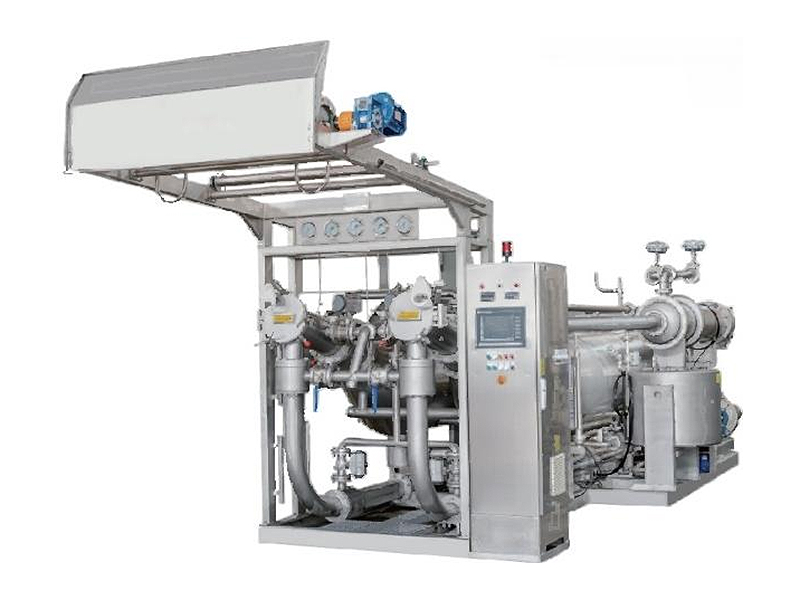
Standard models rarely fit every factory perfectly. Determine the supplier’s willingness and engineering capacity to modify their baseline models. You may require niche production adjustments like specialized liquor paths, custom carrier designs, or modified plaiters. A capable provider of custom dyeing equipment will adapt their technology to your floor plan and workflow. They should be able to adjust the height of the unloading reel to match your existing fabric carts.
Review their prototyping and approval process. Before manufacturing begins, the supplier should provide detailed 3D models and technical drawings. This approval phase ensures all dimensional constraints and utility connection points align with your facility's layout. Check the orientation of the steam, water, and drain valves. If they are on the wrong side of the machine, your piping costs will double during installation.
Textile manufacturing standards evolve rapidly. Evaluate the supplier’s roadmap for software updates, automation upgrades, and IoT integration. Equipment purchased today must remain viable a decade from now. Assess how easily the machinery can be retrofitted with new sensors or advanced dosing modules. Can you add an automatic salt dosing system later without replacing the entire control panel?
Environmental regulations continue to tighten globally. Ensure the equipment can adapt to stricter chemical discharge and wastewater compliance standards. Machines designed with modular upgrades in mind prevent premature obsolescence and protect your initial investment. Look for standardized flange connections and ample space in the electrical cabinet for future expansion modules.
Benchmarking the manufacturer is a critical step in the procurement process. Determine if you are dealing with a top-tier global dyeing machine manufacturer with a proven international track record. Regional fabricators with limited export experience often struggle with international compliance and remote support. They may build a solid steel vessel, but their electrical panels and software often fall short of industrial standards.
Request a verified reference list of active, high-capacity textile mills operating under similar production demands. Contact these references directly. Ask them about machine uptime, actual utility consumption, and the supplier's responsiveness during critical breakdowns. A reputable textile machinery supplier will gladly provide contacts for their successful installations.
The reliability of your equipment depends on its internal components. Demand a comprehensive bill of materials (BOM) for all critical parts. This includes main circulation pumps, pneumatic valves, logic controllers, frequency inverters, and temperature sensors. You need to know exactly what you are buying.
Favor manufacturers who utilize globally recognized, easily replaceable third-party components. Brands like Siemens, Danfoss, and Omron have global distribution networks. Avoid suppliers who rely on proprietary, locked-in parts. Proprietary components force you to buy exclusively from the manufacturer, often resulting in long lead times and inflated replacement costs. If a pneumatic valve fails at 2 AM on a Sunday, you need to be able to buy a replacement from a local industrial supply house.
The physical delivery of the machine is only the halfway point. Define the exact scope of the supplier’s on-site installation support. Clarify who is responsible for rigging, leveling, and connecting utility lines. Establish strict physical commissioning protocols to verify that the machine meets all performance guarantees before final sign-off. The supplier must prove the machine can hit the promised heating gradients and liquor ratios during a live production run.
Evaluate their training programs for your floor operators, dyehouse masters, and maintenance engineers. Proper training ensures a smooth handover. It directly impacts your First-Time-Right (FTR) rates. Operators must understand how to navigate the control software, troubleshoot common alarms, and perform daily preventative maintenance. Maintenance engineers need detailed schematics and hands-on training for replacing mechanical seals and calibrating dosing pumps.
Analyze the supplier’s global and regional service network. A machine sitting idle while waiting for a proprietary valve shipped from overseas destroys production schedules. Set strict requirements for guaranteed response times for technical support. You need a supplier who answers the phone when your machine goes down.
Establish maximum lead times for critical spare parts. The best suppliers maintain local or regional warehouses stocked with essential consumables and high-wear components. Review the Service Level Agreement (SLA) carefully to ensure it covers remote diagnostics, routine maintenance audits, and emergency on-site interventions. Ensure the SLA clearly defines the escalation process for unresolved technical issues.
Procurement involves more than just the equipment invoice. Calculate freight logistics, import duties, and the cost of specialized rigging equipment required for installation. Assess your current utility infrastructure. You may need to upgrade existing boilers, install larger steam pipes, or upgrade electrical panels to handle the new equipment's peak draw. A new high-capacity dyeing machine might require a dedicated 6-inch water main to achieve the required fill times.
Evaluate your drainage capacity. Modern machines dump thousands of liters of hot wastewater in minutes. If your existing floor trenches are too small, the water will back up and flood the dye house. You must engineer the utility connections before the machine arrives on site.
Integrating new heavy machinery disrupts ongoing operations. Develop a phased installation plan with the supplier to maintain partial factory output. Coordinate the delivery and rigging schedules to minimize interference with active production lines. Schedule the heavy lifting for weekends or planned maintenance shutdowns.
Establish clear performance milestones in the contract. Include clauses that address supplier-caused commissioning delays or failures to meet guaranteed utility metrics. Holding the supplier accountable during the integration phase ensures they dedicate the necessary engineering resources to get the machine running efficiently. Do not release the final payment until the machine has successfully completed a full week of continuous production without major faults.
Choosing the right partner requires balancing upfront engineering quality with long-term operational reliability, utility efficiency, and robust support. Eliminate vendors who cannot provide transparent component lists, verifiable utility data, or clear SLAs. Shortlist those who act as consultative engineers rather than just equipment brokers. You need a supplier who understands the mechanical realities of your specific dye house.
Draft a comprehensive Request for Proposal (RFP) detailing your capacity, fabric types, and utility constraints.
Request technical drawings, component lists, and reference contacts from the shortlisted suppliers.
Conduct a site visit to an active mill currently using the specific machine model you intend to purchase.
Finalize a Service Level Agreement that guarantees maximum lead times for critical spare parts.
A: The most critical factor is matching the machine specifications to your exact fabric types and batch capacities. Furthermore, validating their post-sale support infrastructure and Service Level Agreements ensures long-term operational reliability.
A: Inspect the pressure vessel certifications (ASME, PED) and verify the metallurgy grades, specifically demanding 316L stainless steel or higher. Additionally, review the bill of materials to ensure they use globally recognized third-party components.
A: Yes, top-tier suppliers offer engineering modifications. They can customize liquor paths, adjust tension control mechanisms, and design unique carriers to accommodate specialized fabrics and non-standard batch sizes.
A: Jet machines use high-pressure nozzles to move the fabric, making them ideal for robust synthetics. Overflow machines rely on a gentle flow of liquor to transport the material, which is better suited for delicate knits prone to surface abrasion.
A: Choose hank processing for high-bulk, relaxed yarns like acrylic or wool to maintain their loft. Select cone or package processing for high-density, high-efficiency dyeing of tight yarns like cotton or sewing threads.
A: The liquor ratio compounds your daily utility consumption. A higher ratio requires exponentially more water, thermal energy for heating, chemical dosing, and subsequent wastewater treatment, drastically increasing operational overhead.
A: A robust agreement must include guaranteed response times for technical support, maximum lead times for spare parts, provisions for software updates, and schedules for routine maintenance audits.


