
- All
- Product Name
- Product Keyword
- Product Model
- Product Summary
- Product Description
- Multi Field Search
English
Views: 0 Author: Site Editor Publish Time: 2026-08-17 Origin: Site


Medical textiles carry incredibly high stakes on the production floor. A failure in colorfastness or chemical leaching compromises patient safety immediately. It invalidates sterilization protocols and triggers severe regulatory penalties that halt operations. Plant managers face constant tension. You must achieve strict medical-grade compliance, such as ISO 10993 for biocompatibility. At the same time, you must maintain high-volume manufacturing without inflating overhead. You need a rigorous evaluation framework to succeed in this environment. Selecting the right Medical Textile Dyeing Solutions balances chemical safety, mechanical durability, and operational scalability. This guide breaks down the technical requirements for industrial production. We will examine machine parameters, chemical bonding requirements, and the exact testing protocols needed to keep your facility compliant and productive.
Medical-grade dyeing requires prioritizing biocompatibility and sterilization resistance over purely aesthetic color matching.
Selecting an industrial dyeing machine hinges on precision control capabilities, specifically the ability to replicate exact dye recipes across high-volume batches without variance.
While sustainable, low-water, and waterless dyeing technologies (like supercritical CO2 and plasma) are advancing, their viability in medical textile production depends strictly on meeting non-toxicity and high-temperature durability thresholds.
Successful implementation requires rigorous pilot testing and documented medical textile cases to validate performance before full-scale integration.
Regulatory baselines dictate every step of medical textile dyeing. Facilities must adhere to FDA requirements, Oeko-Tex Standard 100 (Class I/II), and ISO 10993. These standards govern biocompatibility, cytotoxicity, and sensitization. Strict limitations apply to heavy metals, formaldehyde, and restricted azo dyes. You cannot compromise on these metrics. Complete dye fixation is mandatory. It prevents dangerous leaching during end-user contact. Surgical gowns, implantable meshes, and wound care products require absolute chemical stability. When setting up your dyehouse, you must calibrate your wash-off cycles to remove 100% of unfixed colorants. Even trace amounts of residual chemicals will cause a batch to fail cytotoxicity testing. We regularly see facilities fail audits because they rushed the final rinsing stage to save water.
To maintain compliance, your quality control team must implement continuous monitoring. You need inline sensors checking the pH and conductivity of the rinse water. If the conductivity remains high, unfixed salts and dyes are still present. You must extend the wash cycle. Furthermore, your chemical inventory must be strictly controlled. Only use dyes and auxiliaries that come with certified safety data sheets proving they are free from banned amines and heavy metal contaminants. This proactive approach prevents costly rejections down the line.
Medical fabrics endure extreme operational conditions daily. They face repeated autoclaving under high heat and pressure. Gamma irradiation and industrial bleaching using chlorine or peroxide are standard sterilization methods. Fabrics must withstand these stresses without degrading. Testing protocols must prove dye stability. This prevents cross-staining in multi-component medical devices. If a dye migrates during an autoclave cycle, the entire batch fails compliance. You must select dyes engineered for high thermal stability.
Consider the standard autoclave cycle: 134°C for 3 to 4 minutes under pressurized steam. Standard disperse dyes often sublimate at these temperatures. They migrate onto adjacent materials, ruining the product. You must specify high-energy disperse dyes for polyester substrates. For cellulosics, vat dyes offer the best resistance to the harsh chlorine bleaching used in hospital laundries. You must test every new shade formulation against these specific sterilization parameters before approving it for bulk production.
Sterilization Method | Operating Parameters | Dyeing Challenge | Recommended Dye Class |
|---|---|---|---|
Autoclaving | 134°C, pressurized steam | Thermal migration, sublimation | High-energy disperse, Vat |
Gamma Irradiation | 25-50 kGy dosage | Polymer degradation, shade change | Selected reactive, Pigment |
Industrial Bleaching | 150-200 ppm active chlorine | Oxidative destruction of chromophores | Vat dyes |
Managing the environmental footprint is critical for continuous operation. Textile processing requires heavy chemical loads and high water inputs. Facilities must align dye selection with zero liquid discharge (ZLD) compatibility. Effluent treatment plant (ETP) integration is non-negotiable. Reducing toxic discharge ensures long-term operational viability and regulatory adherence. You must evaluate the biological oxygen demand (BOD) and chemical oxygen demand (COD) of every auxiliary chemical you introduce into the process.
When you discharge high-salt effluent from reactive dyeing, it places a massive burden on your ETP. Reverse osmosis membranes foul quickly if the incoming water contains unexhausted dyes and high concentrations of sodium sulfate. You must optimize your dye recipes to maximize exhaustion. Higher exhaustion rates mean less dye in the drain. This directly reduces your wastewater treatment costs and keeps your facility within local discharge limits.
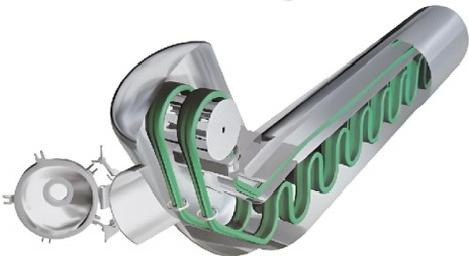
Jet dyeing handles synthetic materials like polyester and polyamide effectively. These substrates dominate privacy curtains and durable PPE. The mechanical action of an industrial dyeing machine forces dye liquor through the fabric. This ensures deep penetration. However, you must evaluate the risks. Aggressive mechanical action can cause surface abrasion on delicate medical knits. Operators must balance pump pressure with fabric tension. If the nozzle pressure is too high, you will damage the structural integrity of the knit, leading to dimensional instability.
To optimize jet dyeing for medical textiles, you need precise control over the heating gradient. Ramping up the temperature too quickly causes uneven dye uptake, resulting in patchy fabrics that fail visual inspection. A standard heating rate of 1.5°C to 2°C per minute is generally safe for high-density polyester woven fabrics. For delicate microfibers used in specialized filtration or wound care, you must reduce the fabric speed and lower the nozzle pressure. This minimizes friction and prevents pilling.
Reactive dyes bond chemically with cotton and viscose blends. These fabrics are common in surgical scrubs and absorbent materials. The covalent bond ensures high wash-fastness. The primary challenge involves intensive wash-off cycles. You must remove all unfixed hydrolyzed dye. Any residual dye poses a severe leaching risk in medical environments. The wash-off process is energy and water-intensive, requiring multiple baths at temperatures approaching 95°C.
Drain the exhausted dye bath completely.
Perform a cold rinse for 10 minutes to remove surface salts.
Execute a neutralization bath using a mild acid to bring the pH down to 7.
Run a boiling soap cycle at 95°C for 15-20 minutes using a high-performance dispersing agent.
Follow up with two warm rinses at 60°C.
Conclude with a final cold rinse to ensure zero color bleeding.
If you skip any of these steps, the fabric will fail the ISO 105-C06 wash fastness test. In a medical setting, a scrub suit that bleeds color during commercial laundering is unacceptable. You must invest in machinery that automates these rinsing sequences to eliminate operator shortcuts.
Vat dyeing provides unmatched resistance to heavy industrial chlorine bleaching. Hospital linens and reusable garments rely on this method. Vat dyes offer superior molecular stability compared to reactive dyes under oxidative chemical stress. The application process is complex. It requires reducing the insoluble dye into a soluble leuco form using sodium hydrosulfite and sodium hydroxide. After the fabric absorbs the leuco dye, you must oxidize it back into its insoluble form inside the fiber.
Controlling the reduction potential of the dye bath is critical. If the bath loses its reducing power due to oxygen exposure, the dye will prematurely oxidize and precipitate out of the solution. This causes severe spotting on the fabric. You must use closed dyeing vessels and monitor the millivolt readings of the bath continuously. Once oxidation is complete, a vigorous boiling soap treatment is necessary to crystallize the dye molecules. This crystallization step is what gives vat dyes their legendary fastness properties.
Waterless methods like supercritical CO2 (scCO2) offer compelling environmental benefits. They eliminate wastewater entirely. Plasma technology serves as a dry pre-treatment. It modifies the fabric surface to improve dye uptake, hydrophilic properties, and chemical adhesion. However, you must weigh operational benefits against current limitations. Substrate compatibility remains narrow. High initial capital expenditure slows widespread adoption.
Supercritical CO2 dyeing operates at extreme pressures, typically around 250 bar, and temperatures near 120°C. Under these conditions, CO2 acts as both a liquid and a gas, dissolving pure disperse dyes and carrying them deep into polyester fibers. When the cycle finishes, you simply depressurize the vessel. The CO2 turns back into a gas, leaving dry, dyed fabric with zero effluent. While this sounds ideal, the machinery requires massive steel pressure vessels. Currently, it only works effectively on pure synthetic fibers. Blends and cellulosics still require traditional aqueous systems.
Machine features directly dictate batch consistency. Automated dosing and real-time spectrophotometry eliminate zero-defect variances. AI-controlled dye recipe systems reduce human error. They ensure repeatable compliance across massive production runs. When a textile dyeing solution integrates AI, operators can lock in parameters for strict medical tolerances. The programmable logic controller (PLC) takes over the entire cycle.
Modern PLCs monitor flow rates, differential pressures, and heating gradients in real-time. If the system detects a drop in pump pressure, it automatically adjusts the motor speed to prevent fabric entanglement. Automated chemical dispensing systems weigh and deliver dyes and auxiliaries with an accuracy of ±0.1 grams. This eliminates the shade variations caused by manual weighing errors. You must integrate these automated systems if you want to maintain the tight colorimetric tolerances required by medical procurement contracts.
You must match machine capacity to your specific production forecasts. Continuous dyeing ranges suit massive runs of uniform hospital linens. Batch or exhaust dyeing machines perform better for specialized, lower-volume medical devices. Automated roll-to-roll processing and multi-kettle configurations help maintain colorimetric tolerances. Evaluating these trade-offs ensures you meet delivery schedules without sacrificing quality.
Continuous pad-thermosol ranges process thousands of meters of fabric per hour. They are highly efficient but require massive yardage to justify the setup time. If you are producing 50,000 meters of standard blue scrub fabric, a continuous range is the right choice. However, if you are dyeing 500-kilogram batches of specialized compression bandages, you need exhaust dyeing machines. Exhaust machines offer the flexibility to change shades quickly and handle delicate structures without applying high longitudinal tension.
Foam and spray dyeing reduce operational costs and improve environmental compliance. Low liquor ratios decrease water consumption significantly. However, engineering skepticism is valid. Reducing water cannot compromise thorough rinsing. You must execute complete wash-off cycles to achieve medical-grade non-toxicity in medical textile production. Foam application systems use air to expand the dye liquor, drastically reducing the amount of water needed to carry the chemicals onto the fabric.
While foam systems work well for applying finishes like antimicrobials or fluorocarbons, using them for primary dyeing requires precise control over foam density and bubble size. If the foam collapses too early, you get uneven penetration. Furthermore, even if you apply the dye with minimal water, you still need substantial water volumes to wash off the unfixed reactive dyes from cellulosic fabrics. You cannot cut corners on the rinsing phase. The risk of chemical leaching is too high.
The industry shows interest in bio-based and plant-derived colorants. Yet, natural dyes struggle in critical medical environments. They lack the stability to withstand industrial autoclaving and gamma radiation. They fail to deliver batch-to-batch reproducibility. Engineered synthetic dyes remain the only reliable choice for meeting stringent sterilization-resistance requirements.
Natural dyes exhibit poor lightfastness and low thermal stability. When subjected to the 134°C heat of an autoclave, the organic chromophores break down rapidly. The fabric changes color and releases degradation byproducts. Additionally, natural dyes require heavy metal mordants, like alum or iron, to fix to the fiber. These mordants often fail the heavy metal extraction limits set by ISO 10993. Until bio-engineered dyes can match the molecular stability of synthetic vat and disperse dyes, they have no place in critical medical textile applications.
Never commit to a new system without executing a proof of concept (PoC). Review documented medical textile cases to verify vendor claims. Third-party lab testing on prototype batches is mandatory. You must verify biocompatibility, cytotoxicity, and physical properties before full-scale integration. A successful PoC bridges the gap between lab-scale samples and bulk production.
Start with a 5-kilogram lab dip to establish the baseline recipe and color match.
Scale up to a 50-kilogram pilot batch using the exact machinery type planned for bulk production.
Subject the pilot batch to full sterilization protocols (autoclaving, gamma, or chemical).
Send samples to an accredited third-party laboratory for ISO 10993 cytotoxicity and sensitization testing.
Analyze the physical properties, including tensile strength and dimensional stability, post-sterilization.
Only proceed to 500-kilogram bulk batches after all tests return passing grades.
Introducing new equipment creates bottlenecks. Utility requirements, wastewater treatment capacity, and operator training demand attention. Legacy facilities often struggle with integration. Implement phased rollouts. Utilize vendor-supported calibration periods to mitigate downtime and maintain production flow. You must audit your boiler capacity before installing new high-temperature machines.
If your new jet dyeing machines require 8 bar of steam pressure to reach 135°C efficiently, but your aging boiler only delivers 6 bar, your heating gradients will fail. The dyeing cycles will take twice as long, destroying your production schedule. Similarly, check your ETP capacity. If the new process generates higher volumes of concentrated salt effluent, your biological treatment tanks might crash. Plan these utility upgrades concurrently with the machine installation.
The optimal medical textile dyeing solution treats coloring as a highly regulated chemical engineering process, not a standard textile finish. Base your choices on substrate type, required sterilization methods, environmental constraints, and production volume. Take the following actions to secure your production line:
Initiate comprehensive vendor audits focusing on ISO 10993 compliance capabilities and machine precision.
Request documented case studies of medical-grade implementations from equipment manufacturers to verify real-world performance.
Begin small-batch pilot testing to validate colorfastness against your specific sterilization protocols before committing to bulk runs.
Upgrade your wash-off and rinsing cycles immediately to guarantee zero chemical leaching and ensure patient safety.
A: Facilities must comply with ISO 10993, Oeko-Tex Class I/II, and FDA regulations. These standards prohibit toxic and carcinogenic substances. They ensure complete biocompatibility and patient safety during end-user contact. You must maintain strict limits on heavy metals, formaldehyde, and restricted azo dyes.
A: It uses ultra-low tension handling to avoid structural damage to delicate knits. It features precise temperature control, automated chemical dosing, and advanced rinsing cycles. This ensures complete dye fixation and zero chemical leaching, which is critical for maintaining dimensional stability and safety.
A: Low liquor ratio reactive dyeing, foam dyeing, and emerging supercritical CO2 techniques are leading solutions. They drastically reduce water usage while maintaining the strict wash-fastness standards required for medical apparel. However, thorough rinsing remains mandatory.
A: No. While sustainable, natural dyes generally lack the chemical stability required. They cannot withstand industrial autoclaving, gamma radiation, or harsh chemical sterilization without degrading or migrating. They also often require heavy metal mordants that fail compliance tests.
A: You must use high-quality synthetic dyes, such as vat or specific high-energy disperse dyes. Additionally, you must implement rigorous post-dyeing wash-off processes to remove all unfixed particles before sterilization. Testing prototype batches under actual autoclave conditions is essential.
A: Common failures include inadequate rinsing leading to chemical leaching. Incorrect tension causes dimensional instability in delicate knits. Poor dye selection results in dye migration under high-heat sterilization, ruining the entire batch and failing regulatory audits.
A: Vat dyes provide superior chlorine bleach resistance and wash-fastness for hospital linens subjected to harsh laundering. Reactive dyes offer brilliant shades and strong bonding on cellulosics but are more susceptible to chlorine degradation over repeated industrial wash cycles.


