
- All
- Product Name
- Product Keyword
- Product Model
- Product Summary
- Product Description
- Multi Field Search
English
Views: 0 Author: Site Editor Publish Time: 2026-08-24 Origin: Site


Textile manufacturing faces escalating operational pressures. Facilities must navigate the rising costs of freshwater acquisition, expensive thermal energy, and increasingly stringent wastewater discharge regulations. Traditional exhaust dyeing operates as a high-overhead process. High liquor ratios, often reaching 10:1 or higher, inflate utility costs. They require excessive chemical auxiliaries and complicate environmental compliance across the board. You cannot sustain profitable operations while wasting massive volumes of heated water.
A Low Liquor Ratio Dyeing Machine offers a structural intervention that directly targets utility consumption at the source. This equipment provides a measurable shift in operational expenditure while maintaining or improving dye exhaustion. By drastically cutting the water required per kilogram of fabric, manufacturers achieve immediate utility relief. You will learn how these machines operate, the exact utility reductions you can expect, and the implementation realities of upgrading your dyehouse.
Water and Wastewater Reduction: Transitioning to low liquor ratio technology can reduce freshwater consumption by up to 44% (achieving ratios of 4.5:1 or lower) and decrease wastewater discharge volumes by 60–80%.
Compounding Cost Savings: Heating smaller volumes of water inherently makes these units highly effective energy saving dyeing equipment, while also requiring fewer salts and chemical auxiliaries.
Quality vs. Efficiency Balance: Modern small liquor ratio dyeing machines utilize advanced nozzle and pump designs to ensure level dyeing and prevent crease marks, mitigating historical risks of low-bath dyeing.
ROI Timeline: Capital expenditure (CapEx) for new equipment is typically offset by aggressive reductions in utility and effluent treatment costs, making it a critical upgrade for high-volume facilities.
The liquor ratio represents the exact weight of water used to dye a given weight of goods. A ratio of 4.5:1 means you use 4.5 kilograms of water for every kilogram of fabric. Traditional bath volumes often submerge the fabric entirely in massive vats of water. Modern short and ultra-short liquor technology shifts this paradigm completely. Fluid dynamic principles allow for deep dye penetration using minimal water. The system relies on mechanical action and precise chemical dosing rather than sheer water volume to transport the dye into the fiber.
Understanding the thermodynamic principles behind this shift is critical for dyehouse managers. When you reduce the water volume, you change the specific heat dynamics of the entire system. Less water means the dye liquor reaches the target temperature faster. It also means the chemical concentration remains higher, forcing the dye molecules into the fiber structure more aggressively. This requires precise control over the heating gradient to prevent uneven dye strike.
Engineering shifts make this efficiency possible. A small liquor ratio dyeing machine applies a thin liquor layer rather than relying on full fabric submersion. High-efficiency circulation pumps move the dye liquor rapidly. Aerodynamic or hydrodynamic fabric transport systems propel the textile through the machine without excessive tension. Precision nozzles atomize or evenly distribute the dye liquor across the fabric surface. Automation and real-time sensors maintain bath stability. They constantly monitor temperature and flow rates to compensate for the reduced liquid volume.
The internal mechanics rely heavily on the main circulation pump and the heat exchanger. The pump must deliver high flow rates at low pressure to avoid damaging delicate fabrics. The heat exchanger must be highly efficient to manage the rapid temperature changes required in modern dye cycles. Furthermore, the fabric transport winch operates in tandem with the liquor flow, ensuring the fabric rope moves smoothly without tangling or stretching.
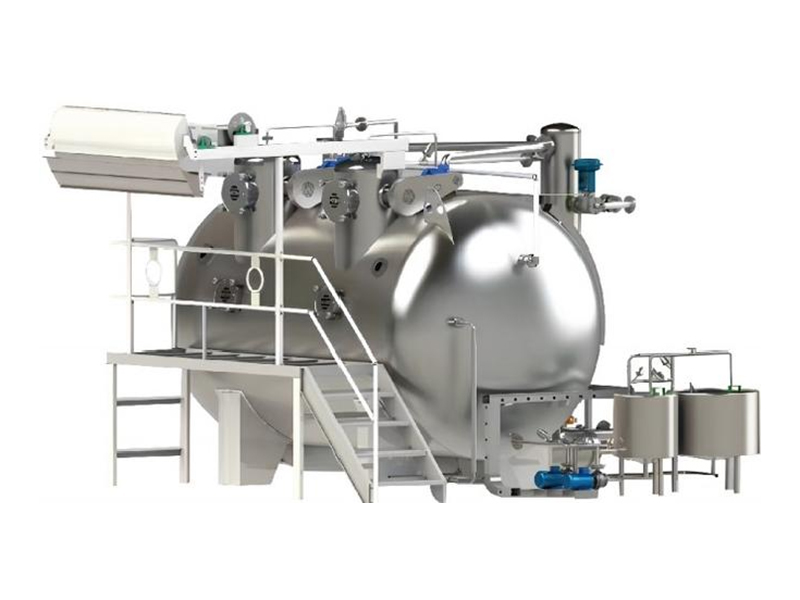
Comparing water usage per kilogram of fabric reveals stark contrasts. Traditional machines consume vast amounts of freshwater, driving up intake costs. A modern water saving dyeing machine achieves specific benchmarks, often reaching ratios of 4.5:1 down to 3:1 for substrates like cotton or synthetics. This yields a minimum of 44% direct water savings compared to older models. The actual savings depend heavily on the substrate type and dye class. Reactive dyes on cotton typically require more water for washing off than disperse dyes on polyester, but low ratio machines optimize the intake for both processes.
To illustrate the impact, consider a facility processing 10,000 kilograms of fabric daily. Moving from a 10:1 ratio to a 5:1 ratio saves 50,000 liters of freshwater every single day. Over a year, this translates to massive reductions in municipal water bills or well-water extraction costs. The savings compound when you factor in the reduced energy required to pump that water through the facility.
Dyeing Technology | Average Liquor Ratio | Water Used per 1000kg Fabric | Estimated Water Savings |
|---|---|---|---|
Traditional Winch Beck | 15:1 | 15,000 Liters | Baseline |
Standard Jet Dyeing | 10:1 | 10,000 Liters | 33% |
Low Liquor Ratio Machine | 5:1 | 5,000 Liters | 66% |
Ultra-Low Ratio Machine | 3.5:1 | 3,500 Liters | 76% |
Reducing input water directly impacts output effluent. Facilities see a 60% to 80% reduction in total effluent volume. This drop correlates directly to lower wastewater treatment facility processing costs. Reduced water volume leads to a higher concentration of exhausted dyes on the fabric. Consequently, you discharge a significantly lower overall mass of salts and unexhausted chemicals into the drain. This reduction serves as a primary driver for meeting strict local and international environmental compliance standards.
Managing high-concentration effluent requires specific strategies. While the total volume is lower, the Chemical Oxygen Demand (COD) and Biological Oxygen Demand (BOD) per liter might be higher. However, treating a smaller volume of highly concentrated wastewater is generally more efficient and requires smaller holding tanks and less energy for aeration compared to treating massive volumes of diluted effluent.
Water possesses a high specific heat capacity. Heating less water requires proportionally less steam and electricity. energy saving dyeing equipment slashes thermal energy consumption during the heating, holding, and cooling phases of the dye cycle. Secondary energy savings occur during the drying phase. Because the fabric processes in a thin liquor layer, it retains less excess moisture upon exiting the machine. This drastically reduces the thermal load on downstream stenters and dryers, saving massive amounts of natural gas or electricity.
The thermodynamics are straightforward. Heating 5,000 liters of water from 20°C to 130°C requires exactly half the thermal energy as heating 10,000 liters. This direct correlation means your boiler fuel consumption drops immediately upon commissioning a low liquor ratio machine. Furthermore, the cooling phase requires less cooling water, compounding the resource efficiency.
A lower bath volume inherently increases dye concentration. This dynamic drives higher exhaustion rates onto the fiber. You also achieve a significant reduction in required chemical auxiliaries. Leveling agents, salts, and alkalis are typically dosed based on bath volume rather than fabric weight. Lowering the volume cuts your chemical consumption. This leads to a reduced salt concentration in wastewater. Reduced chemical inventory and handling streamline operations and improve overall cost-effectiveness.
Calculate the required salt concentration based on the new, lower bath volume.
Adjust alkali dosing to maintain the correct pH profile without over-saturating the bath.
Reduce leveling agent quantities, as the mechanical action of the machine compensates for the lower water volume.
Monitor dye exhaustion rates and adjust the primary dye recipe to prevent over-dyeing.
Operating with less water requires specialized auxiliaries to facilitate levelness. Advanced wetting agents and penetrants, such as dioctyl sodium sulfosuccinate, play a vital role in sustainable low liquor ratio dyeing of cotton. When using reactive dyes like C.I. Reactive Blue 21, these surfactants accelerate dye bath penetration. They prevent strike-rate anomalies when water volume is restricted, ensuring uniform color distribution across the entire fabric batch.
The choice of surfactant dictates the success of the dye cycle. You need low-foaming agents because the high mechanical agitation in low-ratio machines can generate excessive foam, which leads to pump cavitation and fabric tangling. Silicone-based defoamers are often required, but they must be carefully managed to prevent spotting on the finished fabric.
Achieving level dyeing without the buffering effect of a large water bath remains a primary technical concern. Modern machines compensate through increased fabric turnover rates and optimized dye liquor injection. The fabric passes through the nozzle more frequently, ensuring even exposure to the dye. Contrast this application of low liquor ratio technology in exhaust dyeing with semi-continuous or continuous processes like thermosol disperse dyeing of synthetic blends. Exhaust dyeing requires precise mechanical control to match the levelness achieved in continuous ranges.
The nozzle design dictates the liquor exchange rate. A well-designed nozzle ensures the dye liquor penetrates the fabric rope completely during the brief moment it passes through the transport tube. If the liquor exchange is insufficient, the center of the fabric rope will dye lighter than the edges, resulting in unacceptable shade variations.
Processing fabrics in low water volumes increases the risk of mechanical friction, pilling, and crease marks. Machine manufacturers integrate specific features to mitigate these risks. Plaiting devices, tensionless transport rollers, and specialized Teflon coatings reduce friction inside the chamber. These features protect the fabric surface integrity. Upgrading to these systems improves overall textile production efficiency. You achieve faster cycle times and higher right-first-time rates, minimizing costly re-dyeing processes.
Elastane blends require special attention. High tension stretches the elastane, causing permanent fabric distortion. Low liquor ratio machines utilize overfeed mechanisms and variable speed winches to keep the fabric in a relaxed state throughout the dye cycle. This preserves the stretch and recovery properties of the final garment.
Purchasing premium low liquor ratio machinery requires a realistic assessment of upfront costs. Capital expenditure is higher for advanced aerodynamic models. However, the operational expenditure drops immediately. Variables that dictate the payback period include local water costs, energy prices, and effluent discharge fees. Facilities in regions with high utility costs experience much faster returns on investment.
You must calculate the total utility savings per kilogram of fabric to justify the investment. Track your current steam, water, and electricity usage for a specific fabric type. Run a pilot trial on a low liquor ratio machine and measure the exact same metrics. The difference provides your baseline for calculating the payback period.
You must reformulate existing dye recipes to accommodate lower bath volumes. Higher chemical concentrations and specialized wetting agents require precise dosing. Operators face a learning curve when transitioning from traditional equipment to highly automated, low-tolerance systems. Standard operating procedures must be updated, and staff must be trained to monitor digital sensors rather than relying on visual bath inspections.
Training should focus on understanding the machine's control interface. Operators need to know how to adjust pump speeds, winch speeds, and nozzle pressures based on the specific fabric being processed. A failure to calibrate these settings correctly will result in damaged fabric or uneven dyeing, negating the benefits of the new technology.
High-efficiency pumps and fine nozzles demand stricter maintenance protocols. They are more susceptible to clogging from lint or undissolved dyes. You must assess the need for upgraded filtration systems within the machine loop. Regular cleaning cycles and preventative maintenance schedules are non-negotiable to keep these advanced machines running at peak efficiency.
Implement a strict daily and weekly maintenance checklist. Inspect the main filter after every dye cycle. Check the heat exchanger for scale buildup monthly. Verify the calibration of temperature and level sensors quarterly. Proactive maintenance prevents unexpected downtime and ensures consistent dyeing results.
Conduct a comprehensive audit of your current water, steam, and effluent costs per kilogram of dyed fabric. Establish success criteria based on facility-specific bottlenecks. Determine if water scarcity is your primary issue, or if soaring energy costs are destroying your margins. This baseline data will guide your purchasing decisions and help you calculate accurate ROI projections.
Work closely with your utility providers to understand future rate increases. If water costs are projected to rise by 10% annually, the ROI on a low liquor ratio machine becomes even more attractive. Factor these projections into your financial models when presenting the business case to upper management.
Review critical technical dimensions during procurement. Look at the minimum achievable liquor ratio by fabric type. Evaluate pump power consumption, nozzle versatility, and integrated control software. Recommend requesting vendor trials using your facility's specific fabrics and standard dye recipes. Verifying claims through pilot testing ensures the equipment meets your exact production requirements.
Verify the actual liquor ratio achievable with your heaviest cotton fabrics.
Assess the software interface for ease of use and integration with your existing ERP system.
Check the availability of spare parts and local technical support from the manufacturer.
Evaluate the machine's footprint to ensure it fits within your existing dyehouse layout.
Initiate a comprehensive utility audit of your dyehouse to establish baseline costs for water, steam, and effluent treatment.
Recalculate your standard dye recipes to determine the feasibility and chemical savings of operating at a 5:1 or lower liquor ratio.
Engage with top-tier equipment manufacturers to schedule pilot testing using your most challenging fabrics.
Develop a specialized training program for your operators to handle the transition to automated, low-tolerance dyeing systems.
A: A low liquor ratio is typically defined as 5:1 or lower. This means using 5 kilograms of water or less for every kilogram of fabric. It contrasts sharply with traditional ratios of 10:1 or 20:1. The exact achievable ratio varies based on the fabric type and machine design.
A: Heating a smaller volume of water requires significantly less steam and electrical energy. Processing with a thin liquor layer also minimizes post-dyeing drying energy, as the fabric retains less water. This classifies the machinery as highly effective energy saving dyeing equipment.
A: Modern machines mitigate risks like crease marks and uneven dyeing. They use aerodynamic transport, high fabric turnover rates, and advanced wetting agents like dioctyl sodium sulfosuccinate. These features ensure excellent fabric quality and level dyeing despite the reduced water volume.
A: The ROI depends heavily on local utility and effluent costs. However, it typically ranges from 1.5 to 3 years. This fast payback period is driven by compounded daily savings in water, thermal energy, and chemical consumption.
A: It can reduce total effluent discharge volumes by 60% to 80%. It also lowers the total mass of discharged salts and unexhausted chemicals. This directly lowers processing costs at your wastewater treatment facility.
A: While minor optimizations are possible on older machines, achieving true ultra-short liquor ratios requires fundamentally different engineering. You need specialized pumps, nozzles, and chamber designs that standard traditional machines simply do not possess.


