
- All
- Product Name
- Product Keyword
- Product Model
- Product Summary
- Product Description
- Multi Field Search
English
Views: 0 Author: Site Editor Publish Time: 2026-01-16 Origin: Site


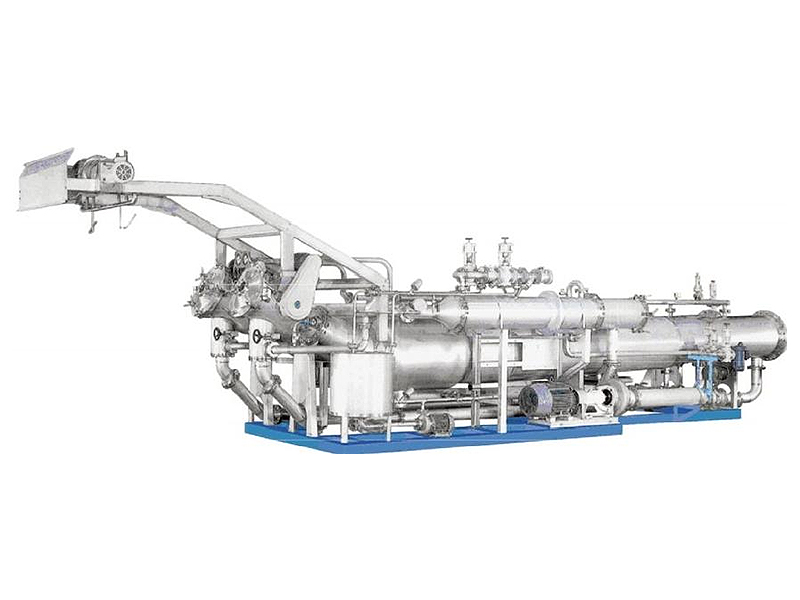
The textile industry never stands still. As consumer demand shifts toward synthetic fibers like polyester and performance-based knitted fabrics (think of your favorite yoga pants or activewear), manufacturing processes have had to evolve rapidly. Traditional methods that worked for cotton or wool simply couldn’t handle the high temperatures or tension requirements of these modern materials without causing damage or uneven coloration.
Enter jet dyeing. This technology has become the backbone of modern fabric coloration, particularly for synthetics. Unlike older methods where fabric was pulled mechanically through a bath, jet dyeing uses the power of fluid dynamics to transport materials. It offers a unique combination of speed, efficiency, and gentleness that is essential for high-volume production.
Whether you are a textile engineering student, a factory manager, or a fashion brand owner, understanding the mechanics of jet dyeing is crucial. This guide covers the working principles, machinery types, operational steps, and the advantages that keep this technology at the forefront of the industry.
At its core, a jet dyeing machine is a vessel used to dye fabric in rope form. The defining feature of this technology is how the fabric moves. In traditional machines, a mechanical reel or winch pulls the wet fabric, which creates significant tension. In a jet dyeing machine, the fabric is transported primarily by a high-velocity stream—or “jet”—of dye liquor.
This creates a dynamic environment where both the fabric and the dye bath are in motion simultaneously. The dye liquor is pumped through a Venturi nozzle (a constricted tube), creating a powerful current that carries the fabric rope along with it.
Because the liquid transports the fabric, mechanical friction is drastically reduced. This classifies jet dyeing as a low-tension, high-circulation system. While there is usually a winch reel to assist, the primary drive comes from the water pressure. Furthermore, these machines are typically fully enclosed pressure vessels, allowing them to operate at High Temperature and High Pressure (HTHP) conditions—often exceeding 130°C—which is chemically necessary to dye polyester fibers effectively.
The development of jet dyeing was a direct response to the limitations of existing machinery in the mid-20th century. Before jets, dye houses relied on winches, jigs, and beam dyeing machines.
Winch dyeing was low-tension but required massive amounts of water and couldn’t reach the high temperatures needed for the booming polyester market. Beam dyeing allowed for high temperatures but required the fabric to be wound onto a perforated beam, which often led to “flattening” effects on textured yarns, ruining the fabric’s hand feel.
Jet dyeing emerged as the solution to these problems. Early models solved the temperature and penetration issues but were often too aggressive, leading to surface abrasion on delicate fabrics. Over the decades, engineers refined the technology. They adjusted nozzle pressures and reduced the speed difference between the fabric and the liquid. This evolution led to the modern “soft-flow” and “airflow” machines we see today, which can handle even the most delicate microfibers and elastane blends without damage.
The fundamental principle of jet dyeing relies on the Venturi effect. A powerful centrifugal pump circulates the dye liquor from the bottom of the machine, through a heat exchanger, and into a nozzle (the jet).
The fabric passes through this nozzle, which is a narrow ring. As the dye liquor is forced through this constriction, its velocity increases rapidly. This high-speed stream grabs the fabric rope and pushes it through a transport tube.
This creates two distinct phases of operation:
The Active Phase: The fabric passes through the jet nozzle. Here, the turbulence is highest, and the dye liquor is forcibly injected into the fiber structure. This is where the majority of dye penetration occurs.
The Passive Phase: After leaving the transport tube, the fabric moves slowly into a storage chamber (often called the J-box) where it folds over itself and relaxes in the dye bath before being pulled up to the nozzle again.
While atmospheric jet dyeing machines exist (operating up to 98°C), the vast majority are HTHP machines. To dye polyester with disperse dyes, the polymer structure of the fiber needs to “open up” to accept the large dye molecules. This only happens effectively above the glass transition temperature of the fiber.
Therefore, jet dyeing machines are designed to withstand significant internal pressure, allowing the dye bath to remain liquid at temperatures between 120°C and 140°C. This pressurized environment ensures rapid diffusion of the dye into the fiber core.
The fabric circulates in a continuous loop. Before the process starts, the two ends of the fabric roll are sewn together. Inside the machine, the fabric creates a spiraling “rope.”
Turbulence is actually a benefit here. As the fabric shoots out of the jet nozzle, the sudden change in pressure causes the rope to “balloon” or expand. This constant shifting of position prevents the fabric from creasing in the same spot repeatedly, which significantly aids in level dyeing and prevents permanent crease marks—a common headache in winch dyeing.
Understanding the hardware helps in understanding the process. A standard machine consists of several critical systems.
Pressure Vessel: Usually made of corrosion-resistant stainless steel (SS 316L), this main tank houses the fabric and liquor. It is sealed to maintain pressure.
Fabric Transport Tube: A pipe that guides the fabric from the nozzle to the back of the vessel.
Jet Nozzle: The heart of the machine. The diameter and gap of the nozzle can often be adjusted to suit different fabric weights (from light chiffon to heavy fleece).
Centrifugal Pump: This heavy-duty pump is responsible for the massive flow rate required to move the fabric.
Heat Exchanger: Located in the circulation pipeline, this device heats the dye liquor using steam or cools it using water. It ensures the temperature rises or falls uniformly across the entire bath.
Fabric Plaiter: A mechanical arm that moves back and forth to arrange the fabric neatly as it falls into the storage chamber, preventing tangles.
Modern dye houses rely on automation for consistency. Machines are equipped with PLC (Programmable Logic Controller) systems that manage the entire “recipe”—heating rates, dosing times, and pump speeds. Safety interlocks prevent the machine from opening while under pressure, and pressure relief valves protect the vessel from over-pressurization.
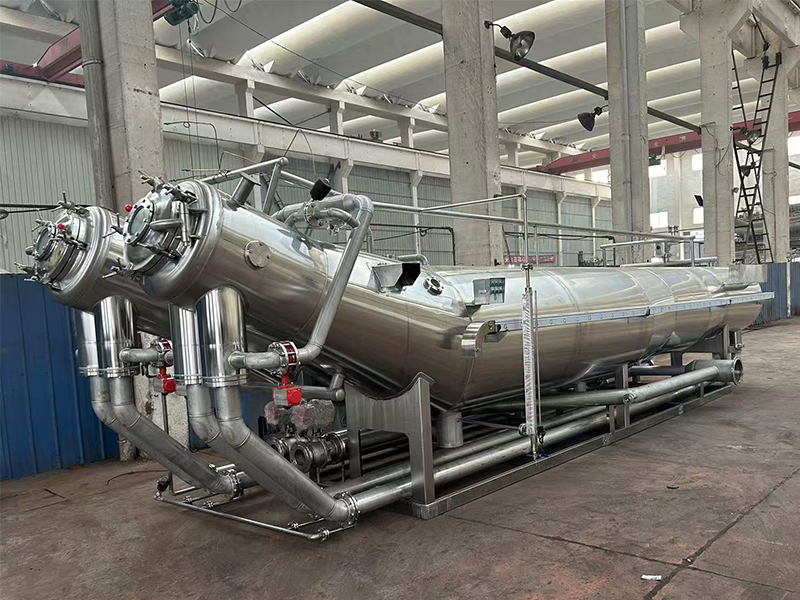
The process begins with loading the fabric. The operator feeds the fabric into the nozzle using a guide rope. Once the entire length is inside, the head and tail of the fabric are sewn together to form an endless loop. The weight of the batch must be calculated carefully; overloading causes tangles, while underloading is inefficient.
The machine is filled with water to the required level. Jet dyeing generally operates at a “liquor ratio” (fabric weight to water volume) of 1:5 to 1:10. Auxiliaries like leveling agents, dispersing agents, and pH buffers are added via a side tank (dosing tank) to ensure they mix evenly before touching the fabric.
Once the chemicals circulate, the heating phase begins. The temperature isn’t just cranked up instantly. It follows a programmed ramp rate (e.g., 1°C per minute). This gradual increase is vital to ensure the dye absorbs evenly. If the temperature jumps too fast, dye will rush onto the outer fibers, causing uneven or “patchy” shades.
Once the target temperature (e.g., 130°C for polyester) is reached, the machine holds this temperature for a set time, usually 30 to 60 minutes. During this “dwell time,” the pump speed is optimized to ensure the fabric completes a specific number of cycle turns per minute, guaranteeing thorough penetration.
After dyeing, the bath must be cooled. Just like heating, cooling must be controlled (gradual cooling) to prevent thermal shock, which can permanently crease synthetic fabrics.
The spent dye liquor is drained. The fabric then undergoes several rinse cycles to wash off unfixed surface dye. For polyester, a “reduction clearing” step is often performed using caustic soda and hydrosulfite to strip away loose dye molecules, ensuring the fabric is colorfast and won’t stain other clothes during washing.
The loop is cut, and a reel pulls the wet fabric out of the machine into a trolley. From there, it moves to a hydro-extractor or squeezer to remove excess water before final drying on a stenter frame.
Jet dyeing is synonymous with synthetic fibers.
Polyester: The primary candidate due to the high-temperature requirement.
Nylon (Polyamide): Dyes excellently in jet machines.
Microfibers: The gentle action helps penetrate the dense structure of microfibers without surface damage.
Knitted Fabrics: Knits are prone to stretching. The low-tension environment of a jet machine preserves the dimensional stability of the knit loops.
Stretch/Elastic Fabrics: Fabrics containing Spandex or Lycra benefit from the relaxation that occurs in the dye bath, helping to pre-shrink the fabric.
Heavy woven fabrics (like heavy canvas or denim) are often too stiff to form a flexible rope and may develop permanent crease marks. Extremely delicate filament yarns might also suffer from surface abrasion if the jet pressure is too high.
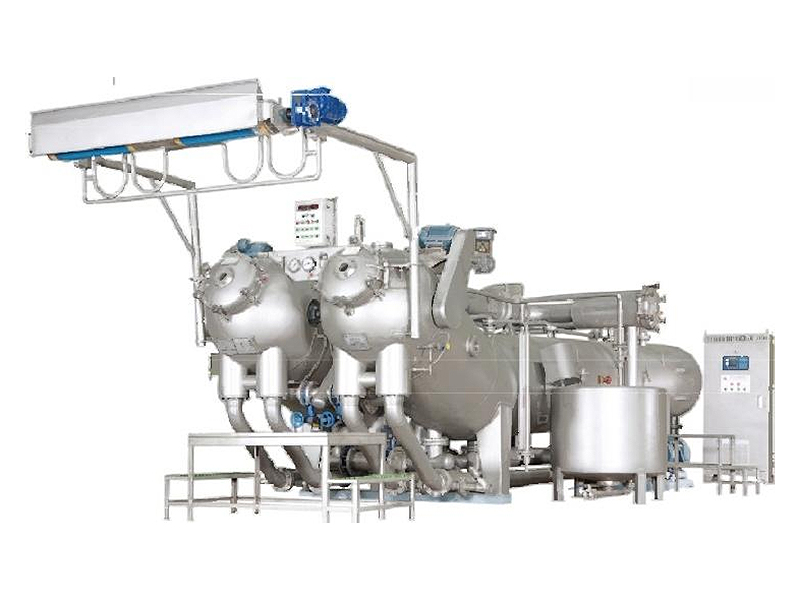
The original design features a nozzle completely submerged in liquid or positioned just above it. While effective, the high turbulence can sometimes cause surface pilling on spun yarns.
In “Soft Flow” machines, the transport of fabric is gentler. The fabric and liquor move at very similar speeds, reducing the drag force on the fabric surface. The nozzle diameter is typically larger, and the pressure is lower. This is the industry standard for delicate knits and high-quality viscose blends.
This is the modern eco-friendly evolution. Instead of using only water to transport the fabric, these machines inject a stream of air (gas) mixed with atomized dye liquor.
Benefit: The fabric is lighter because it isn’t soaked in a heavy bath while moving, and the liquor ratio drops significantly (sometimes as low as 1:3), saving massive amounts of water and steam.
| Feature | Conventional Jet | Soft Flow | Airflow |
|---|---|---|---|
| Fabric Handling | Aggressive | Gentle | Very Gentle |
| Water Usage | High (1:10) | Medium (1:6) | Low (1:4) |
| Fabric Type | Standard Polyester | Delicate Knits | Microfibers/Eco-focus |
Uniform Dyeing: The vigorous circulation forces dye into the fabric, resulting in excellent leveling.
High Capacity: Modern machines can dye batches ranging from 100kg to over 1000kg by coupling multiple tubes together.
Low Tension: The liquid transport minimizes elongation, preserving the fabric’s structure.
Efficiency: Compared to winch dyeing, jet dyeing uses less water, energy, and chemicals per kilogram of fabric.
Versatility: One machine can process a wide variety of fabric weights and types.
Despite its popularity, the process isn’t perfect.
Crease Marks: If the fabric rope isn’t shifting position regularly, heat-set creases can form.
Foaming: The high turbulence can generate foam, which creates spots on the fabric. Antifoaming agents are mandatory.
Entanglement: If the loading capacity is exceeded or the pump speed is wrong, the fabric rope can tangle (knot) inside the vessel. Untangling a hot, pressurized machine is a nightmare for operators.
Maintenance: The nozzles, pumps, and filters require constant cleaning to prevent clogging and dye spots.
Jig dyeing processes fabric in open width (flat), keeping it under high tension as it rolls back and forth. This is great for woven fabrics that shouldn’t crease, but terrible for knits that will stretch out. Jet dyeing is the opposite: rope form and low tension.
Beam dyeing is static; the fabric sits on a perforated roll while liquid is pumped through it. It is very gentle but can leave “watermarks” or moiré effects on the fabric layers. Jet dyeing is dynamic, avoiding these layer-pressure issues.
Winch dyeing is the ancestor of the jet. It operates at atmospheric pressure (max 98°C). Jet dyeing is faster, uses less water, and—crucially—can reach the 130°C+ temps needed for modern synthetics.
You likely have jet-dyed items in your closet right now.
Sportswear: Polyester jerseys, leggings, and swimwear are almost exclusively dyed on jet machines.
Fashion: Polyester blouses, dresses, and skirts.
Home Textiles: Curtains and bedspreads made from synthetic blends.
Automotive: The fabric used on car seats and roof linings is jet dyed for high colorfastness and durability.
It is primarily used for dyeing synthetic fabrics (like polyester and nylon) and their blends, especially in knitted constructions that require low tension processing.
It uses a high-speed stream of dye liquor pumped through a nozzle to transport the fabric rope through a pressurized vessel, ensuring the dye penetrates the fibers evenly.
Yes, soft-flow jet machines can dye cotton knits effectively. However, since cotton doesn’t require high temperatures (it dyes at 60-90°C), simpler machines like overflow dyers are sometimes used instead to save energy costs.
“Jet dyeing” refers to the method of fabric transport (using a jet nozzle). “HTHP” (High Temperature High Pressure) refers to the vessel conditions. Most jet dyeing machines are HTHP machines because they are designed to operate above 100°C.
Polyester knits, microfibers, polyester/spandex blends, and delicate viscose blends are the best candidates.
Compared to older methods like winch dyeing, yes. It uses less water and energy. However, modern “Airflow” jet machines are significantly more eco-friendly than conventional water-driven jet machines.
Jet dyeing represents the perfect intersection of chemistry and engineering. By mastering the flow of liquid and fabric, manufacturers can produce vibrant, high-quality textiles at speeds that were unimaginable fifty years ago.
While the machinery requires skilled operators and careful maintenance to avoid mechanical tangles or surface damage, the benefits far outweigh the risks. As the industry moves toward sustainability, we can expect to see further innovations in airflow technology and ultra-low liquor ratios, ensuring that jet dyeing remains the heartbeat of the dye house for decades to come.


