
- All
- Product Name
- Product Keyword
- Product Model
- Product Summary
- Product Description
- Multi Field Search
English
Views: 0 Author: Site Editor Publish Time: 2026-03-24 Origin: Site


Temperature range is one of the first things buyers and process engineers check when comparing Overflow Dyeing Machines, because it directly affects fabric compatibility, shade depth, dye penetration, and production consistency. The answer is not just one number. Many modern jet overflow systems are designed to reach about 135–140°C, but actual operating temperatures vary by fiber, dye class, and recipe. Polyester often runs at higher temperatures, while cotton, blends, and other fabrics may require much lower settings. In this article, you will learn both the machine’s maximum capability and the practical temperature ranges used in real dyeing production.
A jet overflow machine may be designed to reach 135°C or 140°C, but that does not mean every batch runs at the top end. The design temperature tells you the thermal ceiling the vessel, seals, control system, and pressure circuit can safely support. The process temperature is the recipe temperature chosen for a specific fabric and dye system. That distinction matters in buying decisions. A mill may need a 140°C-capable machine for polyester, yet still run many cotton or nylon lots much lower. Several machine makers list maximum working temperatures in the 135–140°C range for modern high-temperature overflow or jet systems.
In real mills, the useful window stretches from low-temperature wet processing zones up to high-temperature pressurized dyeing. Cotton and many cellulosic programs often fall in the 60–100°C band, depending on the reactive dye route and recipe design. Nylon dyeing commonly works near the boil, often around 90–98°C. Polyester dyeing, by contrast, usually needs the higher band of 120–135°C, where disperse dyes can diffuse into the tighter fiber structure. That is why Overflow Dyeing Machines with high-temperature, high-pressure capability are valued. They let one platform cover a broad mix of commercial fabrics instead of locking production into one thermal band.
A useful way to read this topic is to link each fabric result to a specific temperature behavior. In real production, temperature affects dye diffusion, exhaustion speed, levelness, and final shade build in different ways for polyester, cotton, and nylon. The details below show where control matters most and which technical points buyers should verify.
| Fabric / dyeing case | Key temperature zone | Technical indicator | What temperature does in practice | Application value in Overflow Dyeing Machines | Important control note |
|---|---|---|---|---|---|
| Polyester with disperse dyes | 130–140°C | High-pressure dyeing required; some lab and industrial references use 130–135°C | Promotes dye diffusion into compact polyester structure and supports fuller penetration | Helps build deeper shades and stronger color yield on synthetic fabrics | Machine must maintain stable pressure and temperature at the high end. |
| Polyester process comparison | 85, 90, 95, 100, 130°C | One reference compares exhaustion behavior across these five temperatures | Lower temperatures can reduce exhaustion and shade depth compared with 130°C | Shows why high-temperature capability matters when polyester is a main fabric group | Ask whether the machine can hold 130°C evenly across the full batch. |
| Polyester heating program | From 30°C to 130°C at 2°C/min, then hold | Reported laboratory dyeing profile | A controlled rise improves diffusion while helping avoid abrupt uptake behavior | Useful for repeatable shade build and recipe transfer from lab to bulk | Ramp control matters almost as much as the final setpoint. |
| Cotton with reactive dyes | 60–90°C | Recent work evaluates dyeing at 60, 70, 80, and 90°C | Temperature changes exhaustion, fixation behavior, and final color performance | Gives mills room to tune recipes for brightness, fixation, and process balance | Mid-range stability is important, not just maximum temperature. |
| Cotton high-temperature reference point | Around 98°C | Reactive dye bond stability has been studied at 98°C | High temperature can affect hydrolysis and fixation balance during reactive systems | Relevant when cotton processing includes hotter reaction or washing stages | Buyers should ask how accurately the machine controls near-boiling conditions. |
| Nylon dyeing | Near 100°C | One recent nylon study optimized dyeing at 100°C, 60 min, pH 4.8, M:L 1:30 | Temperature strongly affects coloration depth and shade repeatability | Supports stable dye uptake for nylon-based production | The machine should provide smooth control near the boil and stable hold time. |
| Older jet machine operating caution | Below dye critical temperature at start | Older jet machines cited at 1.5–2.0 cycles/min flow | Starting too high can increase unlevelness risk in polyester dyeing | Shows why controlled entry into the uptake zone improves levelness | Ask about circulation rate and how it supports level dyeing at temperature. |
| Levelness-sensitive temperature control | Fiber-specific uptake zone | Depends on fiber, dye class, ramp rate, and hold time | Too little heat can reduce penetration; too much or too fast can disturb levelness or reaction balance | Broad, controllable thermal range improves repeatability across mixed fabric categories | Best results come from range plus precise programmable control. |
Tip: When comparing suppliers, do not ask only for the machine’s maximum temperature. Ask for the recommended ramp rate, hold time, and stable operating window for polyester, cotton, and nylon. That gives a much clearer view of real dyeing performance.
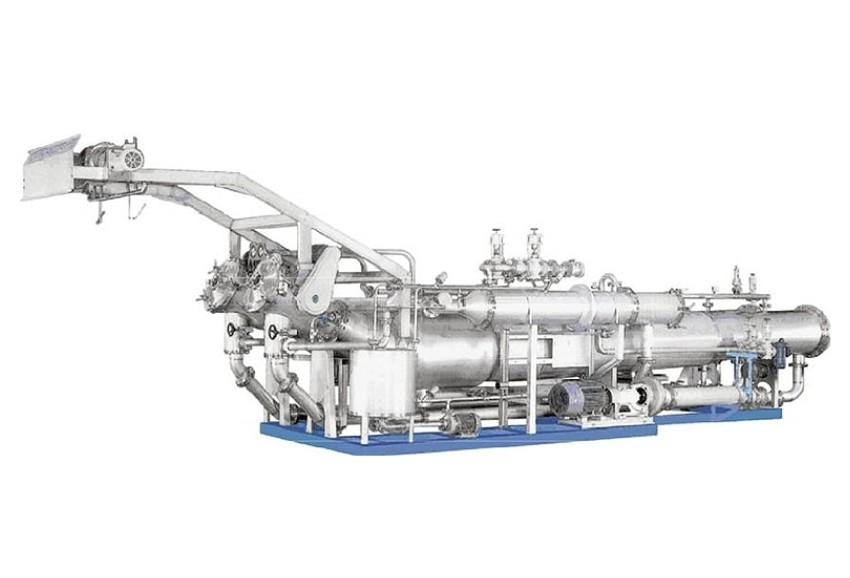
Polyester sits at the high end of the range. Its compact structure usually calls for disperse dyeing under pressure, often around 130–135°C. That is why many overflow and jet systems are built as high-temperature, high-pressure machines. At these temperatures, the fiber opens enough for proper dye diffusion, and mills can build deeper shades more reliably. This also explains why a machine rated only for near-boiling work will not serve every polyester program well. For synthetic-heavy production, the thermal ceiling is not just a nice feature. It is a core capability requirement.
Cotton usually works in a lower temperature band, though the exact point depends on dye class and process design. Several reactive dye references place practical cotton dyeing around 60°C or 80°C, while some literature and wet processing steps discuss temperatures near 98°C or boiling for specific reactions or after-treatment stages. That makes cotton a good example of why buyers should not ask only for a machine’s top temperature. They should also ask how steadily it controls lower and mid-range setpoints. Good cotton results often depend on controlled chemistry, steady ramps, and balanced holding rather than extreme heat.
Blends are where broad-range Overflow Dyeing Machines show real commercial value. Polyester/cotton, nylon blends, and other mixed constructions often need recipes that balance the needs of more than one fiber. Recent literature on polyester/cotton systems notes reactive dyeing around 80°C for the cotton side, while polyester dyeing in two-bath practice typically sits above 120°C. That does not mean every blend uses both zones in one exact way, but it does show why flexible thermal capability matters. Mills serving varied orders can tune recipes across a wider window and keep one machine class productive across more fabric portfolios.
Final temperature gets attention, but the heating path often matters just as much. In jet and overflow dyeing, the dye does not enter the fiber at one sudden point. Uptake builds as temperature rises, and uneven ramping can disturb levelness, especially in sensitive zones. Nylon guidance, for example, recommends slow heating through the main absorption range, such as 1–2°C per minute from roughly 60°C to 95°C. Machine references for soft-flow systems also highlight defined heating rates, often around 3–5°C per minute depending on the stage and steam conditions. That tells us a well-controlled rise is part of dye quality, not just cycle timing.
Once the bath reaches target temperature, the hold phase takes over. This stage allows dye diffusion, exhaustion, and fixation to stabilize before cooling starts. On polyester systems, ScienceDirect notes that some disperse dye processes achieve shorter fixation times of about 20 minutes at 130–135°C. In plant practice, the exact hold still depends on shade depth, fabric weight, and dye selection. What matters for B2B users is the machine’s ability to hold the setpoint steadily without overshoot or drift. Stable holding supports better reproducibility, and reproducibility is what mills sell. It reduces rework and protects delivery confidence.
Cooling is often treated as the last step, yet it shapes both quality and line flow. Manufacturers of high-temperature jet systems publish cooling figures such as 130°C to 80°C in about 15–25 minutes, depending on water conditions and design. That does not set one universal recipe, but it shows the cooling phase is engineered, not improvised. Controlled cooling helps the next wet steps begin under repeatable conditions. It also supports smoother handling after high-temperature polyester work. When buyers compare Overflow Dyeing Machines, they should view heating, holding, and cooling as one linked temperature-control package rather than three isolated specs.
The best temperature starts with chemistry. Polyester usually pairs with disperse dyes and needs high-temperature pressure dyeing. Cotton commonly uses reactive dyes, often in lower thermal zones. Nylon often uses acid dyes near the boil. These are not minor differences. They define the basic thermal logic of the recipe. A machine may be capable of 140°C, but the right operating point still depends on how the dye enters and bonds with the fiber. That is why experienced mills build temperature programs around fiber-dye interaction first, then adjust for shade depth and speed.
Fabric structure also shapes the setpoint. Lightweight knits, dense woven fabrics, stretch constructions, and delicate blends do not all respond in the same way, even under the same dye class. Industry machine references note that jet systems may be configured differently for synthetics, delicate fabrics, or broader fabric categories, and flexible liquor ratio plus fabric transport design help support that range. In practice, mills fine-tune temperature alongside nozzle pressure, circulation, and time. So the “best temperature” is often a controlled band inside a broader recipe, not a fixed number copied from a chart.
Dark shades, rapid turns, and premium consistency may push the same fabric toward slightly different temperature strategies. A deep polyester shade may need the full high-temperature band plus a solid hold. A lighter cotton order may value faster throughput at lower heat. Energy use also becomes part of the conversation, since soft-flow dyeing involves heating, holding, and cooling that together consume major plant steam. Forbes Marshall notes that this process can account for roughly 35–40% of a plant’s total steam use. So the best setting is not just a color choice. It is also a production and energy decision.
A wide temperature range lets one dye house do more with the same machine footprint. It can handle lower-temperature cotton work, near-boiling nylon programs, and high-temperature polyester production without moving lots to different platforms. That flexibility matters when orders shift week to week. Manufacturers of jet and soft-overflow machines often position their systems for polyester, cotton, viscose, blends, and delicate materials precisely because the machine can operate across a broad thermal window and maintain gentle fabric handling. For mills, that means better asset use and fewer dead zones in scheduling.
Many mills are no longer built around one fabric family. They may run synthetic sportswear, cotton basics, and mixed-fiber fashion fabrics in the same production cycle. In that environment, Overflow Dyeing Machines become more valuable when they can shift from cotton-friendly thermal bands to polyester-capable high-pressure zones without losing control. Equipment makers now promote low liquor ratios, multiple processing modes, and broad fiber compatibility for this reason. The benefit is not just technical. It is commercial. A more adaptable machine supports faster job changeovers and a wider customer mix.
Value grows even more when broad range meets strong control. A 140°C ceiling sounds good, but buyers gain more from stable ramps, reliable pressure management, and repeatable holding performance. Published machine specs often include working pressure around 0.36–0.4 MPa, heating and cooling rates, and low liquor ratios such as 1:3.5 to 1:4.5. Those details matter because they influence how consistently the machine reaches and maintains the chosen thermal profile. Consistent output is where machine capability becomes business value. It supports shade matching, lowers correction work, and makes production planning easier.
Tip: Broad temperature range matters most in mills that run mixed order books. If your plant handles only one narrow product line, control precision may matter more than extra thermal headroom.
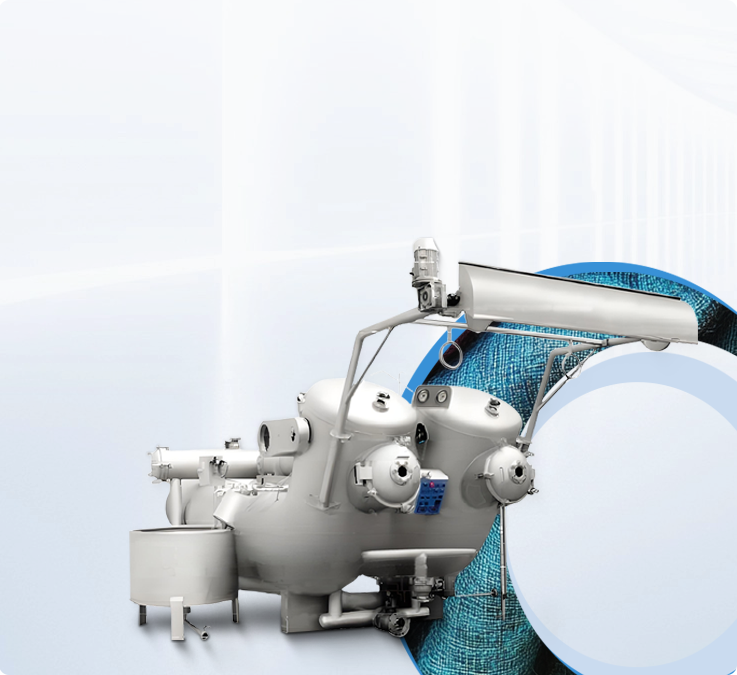
Start with the core thermal and pressure rating. Many commercial jet overflow systems list maximum working temperatures around 135–140°C and pressures around 0.36–0.4 MPa, while some machine descriptions also state design pressure or maximum pressure in bar units. This tells you whether the machine can truly support pressurized polyester dyeing and other high-temperature work. It also gives a first screen for safety margin and recipe flexibility. For polyester-heavy production, a true HTHP rating is essential. Without it, the machine may not cover the thermal window your buyers assume it can.
A good machine on paper can still be the wrong machine for your order book. A cotton-led mill may care more about stable control around 60–100°C. A polyester-focused plant may need full confidence at 130–135°C. A blended-fabric producer may need both. That is why buyers should line up their main fiber mix against the machine’s useful temperature zones, not just the nameplate maximum. Some makers explicitly state different minimum liquor ratios for cotton and synthetic fibers, which is a useful clue that recipe behavior changes by fabric family even on the same platform.
For B2B buyers, temperature range becomes meaningful only when the machine can repeat a recipe accurately. The points below connect common published specs with real purchasing questions, so mills can judge whether Overflow Dyeing Machines offer stable heating, dependable cooling, and programmable control in daily production.
| Evaluation item | What to ask the supplier | Published reference figures | Why it matters in real dyeing | What to check carefully |
|---|---|---|---|---|
| Maximum operating temperature | What is the certified maximum operating temperature? | Many published specs show 135–140°C. | Confirms whether the machine can support HTHP polyester dyeing and other high-temperature programs | Ask whether this is maximum operating temperature or only design temperature |
| Working pressure | What is the maximum working pressure during dyeing? | Public specs often list 0.36–0.40 MPa or about 3.2–4.0 bar. | Pressure stability supports safe operation at high temperatures and helps maintain process repeatability | Confirm the pressure applies under normal running conditions, not only in theory |
| Heating rate, lower band | How fast does it heat from ambient to the mid-temperature zone? | Examples include 20–100°C at about 5°C/min. | Fast and steady heating shortens cycles and improves recipe consistency in lower and mid-range processing | Ask what steam pressure is required to achieve that figure |
| Heating rate, upper band | How fast does it heat in the high-temperature zone? | Examples include 100–130°C at about 2.5°C/min; some sources cite 20–130°C in 25–30 min. | This is the most important zone for polyester-oriented programs, where stable high-end control matters most | Check whether the figure depends on 0.7 MPa saturated steam or similar utility conditions |
| Cooling rate | How fast can it cool after high-temperature dyeing? | Examples include 130–100°C at 3°C/min and 100–85°C at 2°C/min; other specs cite 130–80°C in about 10–20 min. | Cooling performance affects batch turnover, downstream handling, and repeatability before washing or reduction clearing | Ask what cooling-water temperature and pressure were used to obtain the number |
| Heat exchanger performance | Does the machine use a high-efficiency heat exchanger for rapid heat transfer? | Multiple soft-flow references highlight high-efficiency heat exchangers for faster heating and cooling. | Efficient heat exchange supports quicker response, lower thermal lag, and more stable program tracking | Ask whether the exchanger is standard or optional on the quoted model |
| Programmable process control | Can the control system store and repeat multi-step recipes? | Supplier literature commonly mentions automatic control of water, heating, holding, cooling, and drainage. | Recipe programming is essential for repeatable production across polyester, cotton, and blended fabrics | Ask how many recipes can be stored and whether ramp-and-hold steps can be edited by the operator |
| Hold stability | How stable is the machine at the target temperature during dwell time? | Public brochures rarely give a universal numeric tolerance, but they consistently emphasize automatic insulation and temperature control. | Stable holding supports uniform fixation, shade repeatability, and fewer corrections | Ask for real production trend charts, not just brochure claims |
| Liquor ratio and flow conditions | What liquor ratio and flow setup apply under the quoted recipe? | Published practical ratios include about 1:3.5–1:4.5, while some overflow models list 1:6–10. | Liquor ratio influences heat transfer, chemical use, circulation, and how well the machine follows the programmed temperature curve | Confirm whether the ratio changes by fabric type or loading level |
| Utility dependency | Under what steam and cooling-water conditions were the performance numbers measured? | Some specs clearly state 0.7 MPa steam and 0.3 MPa cooling water, or cooling water below 20°C. | Heating and cooling claims are only meaningful when matched to actual plant utilities | Compare supplier figures against your own mill’s steam pressure and cooling-water temperature |
| Fabric speed / circulation support | What circulation speed or transport support does the machine provide? | Published examples include up to 380–450 m/min on some models. | Good circulation helps the machine follow the recipe more evenly across the batch | Ask how fabric speed interacts with delicate fabrics and different GSM ranges |
Tip: Ask suppliers to show one full recipe curve, such as 20°C to 130°C, hold, then 130°C to 80°C, under your plant utility conditions. That single graph often reveals more than a long list of headline specs.
Jet Overflow Dyeing Machines matter for both range and control. Many reach 135–140°C, while real settings vary by fabric and recipe. With precise control, they improve shade consistency and production flexibility. Wuxi Mixc Textile Technology Co., Ltd. delivers value through reliable machine performance, broad fabric adaptability, and professional service support for modern dyeing mills.
A: Most Overflow Dyeing Machines handle about 60–140°C, depending on fabric and recipe.
A: Overflow Dyeing Machines often run polyester at 120–135°C for better dye penetration and shade depth.
A: Yes. Overflow Dyeing Machines often process cotton around 60–100°C, depending on the dyeing stage.
A: Check control precision, heating rate, cooling rate, and recipe flexibility in Overflow Dyeing Machines.


