
- All
- Product Name
- Product Keyword
- Product Model
- Product Summary
- Product Description
- Multi Field Search
English
Views: 0 Author: Site Editor Publish Time: 2026-01-14 Origin: Site


Color is often the primary factor driving a consumer’s purchasing decision. Whether it’s a vibrant summer dress or a heavy-duty outdoor awning, the color must be consistent, durable, and appealing. However, achieving that perfect hue isn’t as simple as dipping fabric into colored water. It is a complex chemical engineering process that varies significantly based on fiber type, production scale, and intended end-use.
For manufacturers, buyers, and designers, understanding the mechanics of textile dyeing is non-negotiable. The method chosen impacts the fabric’s cost and hand feel, as well as its lightfastness and wash durability. A method suitable for polyester knits will ruin a delicate silk weave, just as a technique used for fast fashion might not meet the quality standards of luxury apparel.
This guide breaks down the critical stages of coloration and explores 14 distinct methods of textile dyeing used in modern manufacturing. By understanding these processes, you can make informed decisions that balance aesthetic goals with technical performance and budget.
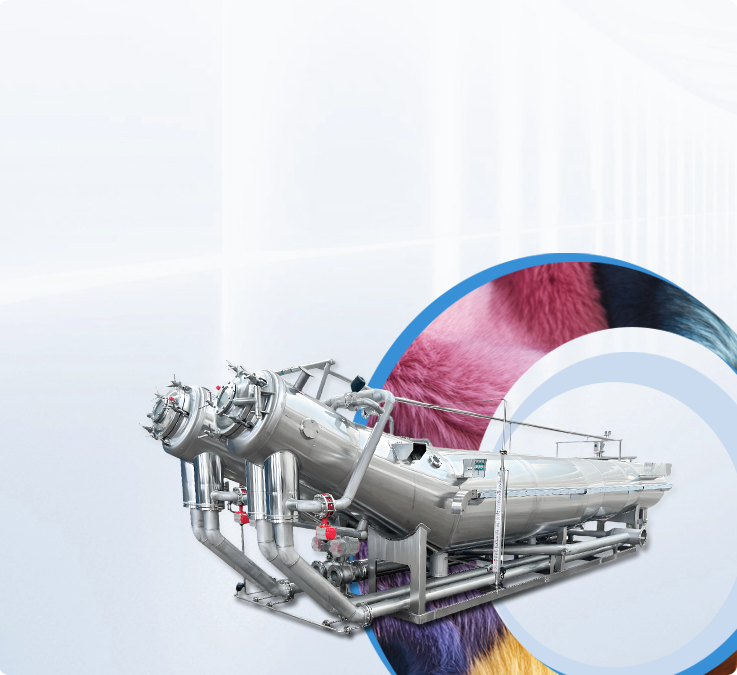
High Temperature & Pressure Energy-saving Dyeing Machine
Textile dyeing is the process of applying colorants-dyes or pigments-to fibers, yarns, or fabrics to achieve a desired color with a high degree of permanence. Unlike printing, which applies color to the surface of the material in a localized pattern, dyeing typically involves immersing the textile in a chemical solution (liquor) to ensure the color penetrates the fiber structure.
The primary difference between dyeing and printing lies in penetration and uniformity. Dyeing aims for uniform coloration throughout the substrate, often involving chemical bonding at the molecular level.
The three main goals of any industrial dyeing process are:
Uniformity: Ensuring the shade is level across the entire batch.
Fastness: Ensuring the color resists fading from washing, light, perspiration, and friction.
Efficiency: Minimizing water, energy, and chemical usage while maximizing output.
Color can be applied at almost any stage of the manufacturing pipeline. The “when” is just as important as the “how.”
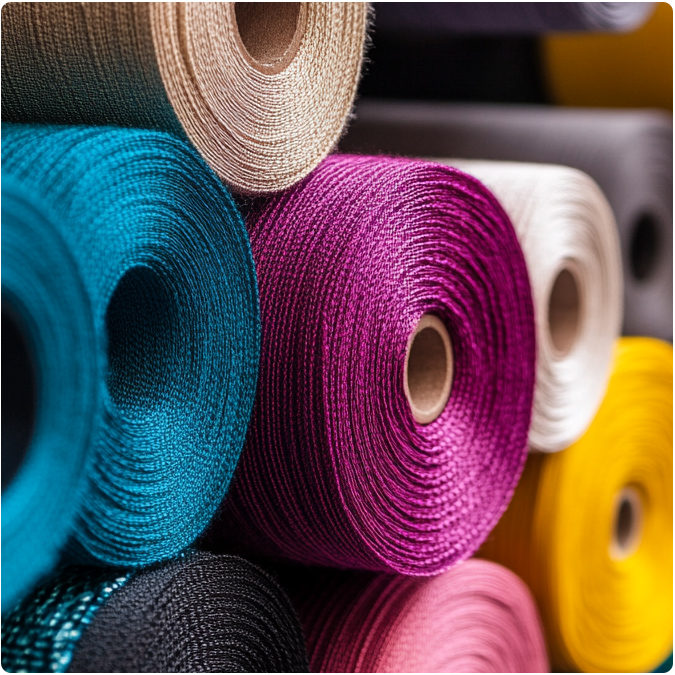
Also known as stock dyeing, this occurs before the fibers are spun into yarn. Loose fibers are immersed in large vats of dye.
Why it’s used: It provides deep, uniform color penetration. It is commonly used for woolens or tweed fabrics where a “heathered” or mixed-color effect is desired by spinning different colored fibers together.
Limitation: It is expensive and requires manufacturers to forecast color trends far in advance.
This occurs after spinning but before weaving or knitting. The yarn is wound onto spools (packages) or beams and submerged in dye.
Applications: This is the standard method for creating patterned woven fabrics like stripes, checks, plaids, and gingham. If you see a patterned shirt where the design is visible on both sides of the fabric, it was likely yarn-dyed.
Also called piece dyeing, this is the most common method in the industry. Constructed fabrics (woven or knitted) are dyed in long rolls.
Why it’s used: It offers the greatest flexibility. Manufacturers can stock “greige” (undyed) goods and dye them quickly in response to shifting fashion trends.
Suitability: Ideal for solid-color garments.
This involves dyeing the finished apparel product after it has been cut and sewn.
Benefits: It creates a softer, “lived-in” feel often seen in casual wear and t-shirts. It allows for rapid response to market demand (Just-In-Time manufacturing).
Risks: Shrinkage must be calculated precisely, and threads/zippers must accept the dye at the same rate as the fabric.
Dyeing methods are generally classified by how the fabric and the dye liquor interact. Is the fabric moving through stationary dye? Is the dye moving through stationary fabric? Or are both moving? The equipment selected depends heavily on the fabric’s construction. For example, delicate knits cannot withstand the high tension of certain machines, while heavy wovens require robust mechanical handling.
| Dyeing Method | How the Dyeing Works | Suitable Fabrics / Fibers | Key Advantages | Main Limitations |
|---|---|---|---|---|
| Vat Dyeing | Dye is chemically reduced, absorbed, then oxidized inside the fiber | Cotton, cellulosic fibers | Exceptional colorfastness; classic deep shades (e.g. indigo denim) | Complex process; limited color range; chemical-intensive |
| Reactive Dyeing | Dye forms a covalent bond with the fiber | Cotton, linen, viscose, rayon | Bright colors; excellent wash fastness | High water, salt, and alkali usage; wastewater treatment challenges |
| Direct Dyeing | Dye adheres to fiber by physical attraction | Cotton (cost-sensitive fabrics) | Simple and economical | Poor wash fastness; bleeding and fading |
| Acid Dyeing | Anionic dyes bond in an acidic bath | Wool, silk, nylon | Brilliant colors; preserves soft hand feel | Not suitable for cotton or polyester |
| Resist Dyeing | Selected areas are blocked from dye penetration | Cotton, silk, decorative fabrics | Unique patterns; artistic effects | Limited scalability; design complexity |
| Solution Dyeing | Pigment added before fiber extrusion | Polyester, acrylic, synthetic fibers | Outstanding UV and fade resistance; highly sustainable | No color flexibility after fiber production |
| Jet Dyeing | Fabric circulates through dye liquor in a pressurized vessel | Knits, polyester, synthetic blends | Soft hand feel; low fabric tension | Not ideal for heavy woven fabrics |
| Jig (Jigger) Dyeing | Fabric moves flat through a stationary dye bath | Woven fabrics (taffeta, satin, poplin) | Efficient for small batches; low liquor ratio | High fabric tension; unsuitable for knits |
| Beam Dyeing | Dye liquor is pumped through stationary fabric on a beam | Lightweight open-width woven fabrics | Minimal mechanical stress; uniform dyeing | Requires open fabric construction |
| Stock Dyeing | Loose fibers dyed before spinning | Wool, specialty yarns | Deep color penetration; yarn-level consistency | Limited flexibility once yarn is spun |
| Bale Dyeing | Entire fiber bales dyed under pressure | Polyester, acrylic tow | High efficiency for bulk fibers | Mainly for commodity fibers |
| Speck Dyeing | Corrective dyeing to mask fiber impurities | Wool fabrics | Improves visual quality | Not a primary dyeing method |
| Batik Dyeing | Wax-resist dyeing using specialized equipment | Cotton, traditional textiles | Cultural value; distinctive patterns | Labor-intensive; limited color control |
Vat dyeing is one of the oldest and most historically significant textile dyeing methods. Its name originates from the large vats traditionally used in the dyeing process. Vat dyes are naturally insoluble in water, which means they cannot be applied directly to fabric. To make them usable, the dyes must first undergo a chemical reduction process that removes oxygen and converts them into a soluble form. Once the reduced dye penetrates the fabric, the material is exposed to air. This exposure triggers oxidation, transforming the dye back into an insoluble state and permanently locking the color molecules inside the fiber structure.
Vat dyeing is primarily used for cotton and other cellulosic fibers. These fibers allow the reduced dye to penetrate deeply, ensuring excellent color retention and long-term durability. Because of this strong fiber–dye interaction, vat dyeing remains a preferred method for applications that demand high performance.
One of the biggest advantages of vat dyeing is its exceptional durability. Fabrics dyed using this method achieve some of the highest colorfastness ratings in the textile industry, particularly in resistance to light exposure and chlorine bleaching. In addition to performance benefits, vat dyeing is also valued for its aesthetic qualities. It produces rich, deep shades—most famously the iconic blue associated with denim. Indigo, the most well-known vat dye, has become synonymous with this technique.
Despite its strengths, vat dyeing does have limitations. The process is relatively complex and relies heavily on chemical treatments, which increases production costs and environmental management requirements. In addition, the available color range is more limited when compared with modern dyeing methods such as reactive dyeing, making it less suitable for applications requiring a wide variety of bright or custom colors.
Reactive dyeing is the most widely used method for coloring cellulose fibers in modern textile manufacturing. As its name indicates, the dye molecule chemically reacts with the fiber molecule, forming a strong covalent bond between the two. Once this bond is established, the dye becomes an integral part of the fiber structure rather than merely sitting on the surface. This chemical fusion is the reason reactive dyeing delivers superior durability and long-lasting color performance in finished fabrics.
Reactive dyeing is especially effective for cellulose-based materials such as cotton, linen, viscose, and rayon. These fibers provide the necessary reactive sites for chemical bonding, allowing the dye to penetrate deeply and fix evenly throughout the fabric.
One of the key advantages of reactive dyeing is its ability to produce a wide spectrum of bright, high-intensity colors. Because the dye forms a chemical bond with the fiber, wash fastness is excellent, and colors remain vibrant even after repeated laundering. This balance of color brilliance and durability makes reactive dyeing a preferred choice for apparel, home textiles, and export-grade fabrics.
Despite its performance benefits, reactive dyeing poses sustainability challenges. The dyeing process typically requires large amounts of salt and alkali to promote dye fixation, resulting in high water consumption. In addition, the wastewater generated is difficult to treat, increasing both environmental impact and operational costs for dyeing facilities.
Direct dyeing is one of the simplest and most economical textile dyeing methods. In this process, the dye is applied directly to the fabric in a hot water bath without the need for complex chemical fixatives or mordants. The dye relies primarily on physical attraction to the fiber rather than forming a strong chemical bond.
Direct dyeing is commonly used for cost-sensitive cotton fabrics where high durability is not a primary requirement. It is often selected for low-priced textiles, short-life products, or applications where ease of processing is prioritized over long-term color performance.
The main advantage of direct dyeing is its low cost and operational simplicity, making it attractive for budget-oriented production. However, the lack of strong dye–fiber bonding results in poor wash fastness. Direct-dyed fabrics are prone to bleeding during washing and fading over time unless additional after-fixing treatments are applied.
Acid dyeing uses water-soluble, anionic dyes that are applied in an acidic dye bath with a low pH value. The acidic environment creates positively charged sites on the fiber surface, which attract the negatively charged dye molecules and allow them to bond effectively.
This method is the standard dyeing process for protein fibers such as wool, silk, and angora, as well as synthetic polyamide fibers like nylon. These fibers respond well to acidic conditions and allow for strong dye fixation.
Acid dyeing is known for producing brilliant, clear, and uniform colors, especially on luxury fibers. In addition, the process does not stiffen the fabric, preserving the soft hand feel and natural drape of materials like silk and wool.
A major limitation of acid dyeing is its limited fiber compatibility. It cannot be used on cotton or polyester, which restricts its application to specific fabric categories.
Resist dyeing is a mechanical rather than chemical dyeing technique. It works by treating specific areas of the fabric to prevent dye penetration, allowing patterns or designs to form when the fabric is dyed. The untreated areas absorb dye, while the resisted areas remain undyed or lightly colored.
In batik dyeing, hot wax is applied to selected areas of the fabric. During dyeing, the waxed sections resist color absorption, creating distinctive patterns once the wax is removed. Tie-dye, another common technique, involves folding, twisting, or tying the fabric with string or bands to block dye from certain areas.
Although resist dyeing is often associated with crafts and handmade textiles, it also has industrial applications. It is used in high-end fashion, artisanal fabric collections, and traditional cultural textiles where uniqueness and visual texture are valued over mass uniformity.
Solution dyeing, also known as dope dyeing or spun dyeing, differs fundamentally from conventional wet dyeing processes. In this method, pigment is added directly to the liquid polymer solution before it is extruded through a spinneret to form fibers. As a result, the color becomes an inherent part of the fiber itself, similar to how a carrot is orange throughout rather than colored only on the surface.
One of the biggest advantages of solution dyeing is its exceptional color permanence. Fabrics produced using this method offer nearly unbeatable resistance to UV exposure, fading, and bleaching. In addition, solution dyeing uses significantly less water and fewer chemicals than traditional wet dyeing, making it one of the most sustainable textile coloration methods available.
Solution dyeing is considered the gold standard for fabrics exposed to harsh environmental conditions. It is widely used in outdoor furniture, carpets, awnings, marine textiles, and performance fabrics where long-term color stability is critical.
The main limitation of solution dyeing is its lack of flexibility. Color decisions must be made before fiber production begins, making it difficult and costly to change colors quickly or respond to short production runs.
Jet dyeing is a modern, high-speed dyeing method commonly used for knitted fabrics and synthetic materials. In this process, the fabric is sewn into a continuous loop and placed inside a pressurized vessel. A high-velocity jet of dye liquor circulates the fabric through the machine, ensuring rapid and uniform dye penetration.
Jet dyeing is particularly suitable for polyester, synthetic blends, and delicate knitted fabrics that require gentle handling during processing.
The turbulent flow created by the dye liquor gives the fabric a softer, bulkier hand feel, especially in polyester textiles. Because the fabric is moved by liquid rather than mechanical force, tension is kept very low, reducing the risk of stretching, distortion, or surface damage.
Jig dyeing is an open-width dyeing process in which fabric is moved back and forth between two rollers through a stationary dye bath. Unlike rope-form dyeing methods, the fabric remains flat during processing, allowing for better width control.
This method is widely used for woven fabrics such as taffeta, satin, and poplin, where dimensional stability and uniform surface appearance are important.
Jig dyeing is efficient for short production runs and operates with a relatively low liquor ratio, reducing water usage. However, the fabric is subjected to high tension as it is pulled between rollers, making this method unsuitable for delicate knits or elastic fabrics.
In beam dyeing, fabric is wound tightly around a perforated cylindrical beam and placed inside a pressurized vessel. Dye liquor is pumped from the inside of the beam outward, passing evenly through each layer of fabric.
Beam dyeing is best suited for lightweight, open-construction woven fabrics such as sheer curtains, mesh fabrics, and technical textiles that allow liquid to flow through easily.
Because the fabric remains stationary during the dyeing process, there is minimal mechanical stress. This makes beam dyeing an excellent choice for delicate fabrics that might crease, stretch, or snag in other dyeing machines.
Beyond the major machinery, several niche methods solve specific production challenges.
As mentioned in the “stages” section, stock dyeing refers to dyeing loose fibers. It is crucial for woolen manufacturing to achieve depth and color consistency in high-quality yarns.
A variation of stock dyeing where entire bales of synthetic fiber are dyed inside a pressurized vessel without breaking the bale open. This is a high-efficiency method for coloring commodity fibers like polyester or acrylic tow.
This is a corrective process used primarily in wool manufacturing. If the wool fabric has small specks of undyed vegetable matter (burrs), special dyes are applied to cover these imperfections without altering the base fabric color.
While discussed under resist dyeing, Batik serves as a distinct category in manufacturing due to its cultural significance and specific wax-application machinery used in countries like Indonesia to produce traditional textiles on a commercial scale.
Manufacturers must weigh four factors:
Fiber Content: This is the rigid constraint. You cannot use disperse dyes on cotton or acid dyes on polyester.
End Use: Does the product need to withstand chlorine (swimwear)? Sunlight (curtains)? Frequent washing (uniforms)?
Volume: Jet dyeing works for massive lots; garment dyeing works for small, trendy drops.
Cost: Solution dyeing has high upfront costs but low operating costs; vat dyeing is expensive throughout.
The textile dyeing industry is one of the world’s largest polluters of fresh water. Conventional methods require massive amounts of water to flush unfixed dye from the fabric.
However, the industry is shifting. Technologies like AirDye (using air instead of water) and Supercritical CO2 dyeing (using pressurized carbon dioxide to dissolve dye) are eliminating water use entirely in some sectors. Furthermore, strict wastewater treatment protocols in modern facilities ensure that discharged water is often cleaner than the river water it enters.
Solution dyeing is the most durable because the pigment is locked inside the fiber before it becomes solid. Among wet dyeing methods, Vat dyeing and Reactive dyeing offer the best durability.
Reactive dyeing is the industry standard for cotton due to its balance of cost, color variety, and wash fastness.
In jet dyeing, the fabric is moved by a stream of liquid (low tension, good for knits). In jig dyeing, the fabric is pulled by rollers (high tension, good for wovens).
For performance, yes. For fashion flexibility, no. Solution dyeing requires committing to a color months in advance, whereas fabric dyeing allows you to decide the color weeks before sale.
Yes. Closed-loop systems and low-liquor ratio machines (like modern jet dyers) have made eco-friendly production viable and cost-effective at scale.
From the high-speed efficiency of jet dyeing to the chemical complexity of vat dyeing, the method used to color a fabric defines its value and performance. For manufacturers, the goal is always to match the right method to the right fiber and the right price point.
Boost productivity, reduce costs, and achieve consistent, vibrant results with MIXC’s advanced high-temperature and soft-flow dyeing machines.
Whether you’re producing cotton, polyester, nylon, or blended fabrics, our energy-efficient solutions deliver reliable performance for modern textile manufacturing plants. With years of industry experience, user-friendly designs, and global support backed by a “Quality First, Reputation First” ethos, MIXC is your trusted partner for textile dyeing excellence.


