
- All
- Product Name
- Product Keyword
- Product Model
- Product Summary
- Product Description
- Multi Field Search
English
Views: 0 Author: Site Editor Publish Time: 2026-01-22 Origin: Site


A fabric dyeing machine perfect for heavy cotton canvas will destroy a delicate synthetic knit. Similarly, equipment designed for massive continuous output is financial suicide for a facility focused on small-batch, bespoke orders. The wrong choice leads to uneven dyeing, high rejection rates, and wasted resources-outcomes no manufacturer can afford.
This guide provides an industrial classification of fabric dyeing machines. We will analyze the mechanics of how different units handle materials, the specific advantages of major machine types like Jet and Jigger dyers, and how to align your equipment selection with the specific fibers you process.
To select the correct equipment, manufacturers must first understand how machines are classified based on the physical handling of the fabric. This classification dictates which machines are compatible with knits, wovens, or non-wovens.
Rope-form dyeing involves processing the fabric as a continuous strand, bunched together to resemble a rope. This method is predominantly used for knit fabrics and textiles that do not suffer from permanent creasing.
Key characteristics and working mechanism
In these machines, the fabric loop circulates through the dye bath. As it moves, the rope form allows for a high volume of fabric to be processed in a relatively compact vessel. The mechanical action of the fabric rubbing against itself and the vessel walls can help in achieving a soft hand-feel.
Typical fabric types
This method is the standard for circular knits, warp knits, and certain synthetic blends. It allows the fabric to relax during the process, which is beneficial for developing the texture of the textile.
Advantages and limitations
The primary advantage is the relaxed state of the fabric, which prevents tension-related damage. However, the limitation is the risk of “rope marks” or crush marks on sensitive fabrics. If a fabric is prone to permanent creasing (like certain heavy cottons or taffeta), rope dyeing is generally unsuitable.
For fabrics that cannot be roped without damage, open-width dyeing is the required method. Here, the fabric is kept flat and spread out during the entire dyeing cycle.
Structural features and operating principles
These machines utilize rollers or beams to keep the fabric extended to its full width. The dye liquor is applied while the fabric is under tension, ensuring that no creases form.
Suitable woven fabric applications
This is the go-to method for woven fabrics, particularly those used in formal wear, suiting, or industrial applications where a pristine, flat finish is non-negotiable.
Impact on surface quality
Open-width processing guarantees a smooth surface free of break marks. However, the tension applied must be carefully calibrated. excessive tension can stretch the fabric, altering its dimensional stability and basis weight (GSM).
Batch dyeing, or discontinuous dyeing, processes a specific quantity of fabric (a “lot” or “batch”) at one time.
Batch vs continuous logic
In batch processing, the entire lot is submerged or circulated in the dye for a set period until equilibrium is reached. This contrasts with continuous processing, where fabric runs through the machine without stopping.
Production scale and flexibility
Batch machines offer immense flexibility. They are ideal for operations that handle multiple colors and smaller order quantities. If a client needs 500kg of red and 500kg of blue, batch machines are the efficient choice.
Continuous dyeing is designed for massive scale. The fabric is fed into a range that performs dyeing, fixation, and washing in one non-stop sequence.
Industrial production scenarios
This setup is typical for producers of denim, workwear, or sheeting fabrics where orders run into tens of thousands of meters per shade.
Typical processing lines
The heart of this system is usually the “padding mangle,” where dye is squeezed into the fabric, followed by drying and steaming units. The throughput is significantly higher than batch processing, but the startup cost and space requirements are substantial.
Engineering differences
Low-tension machines move fabric using liquid flow or gravity (like soft-flow jets), minimizing mechanical pull. High-tension machines use motorized rollers to pull the fabric through the bath.
Effects on fabrics
High tension is acceptable for rigid cottons or polyesters but disastrous for Lycra or delicate viscose. Using high tension on elastic fabrics will result in a loss of elasticity and recovery properties.
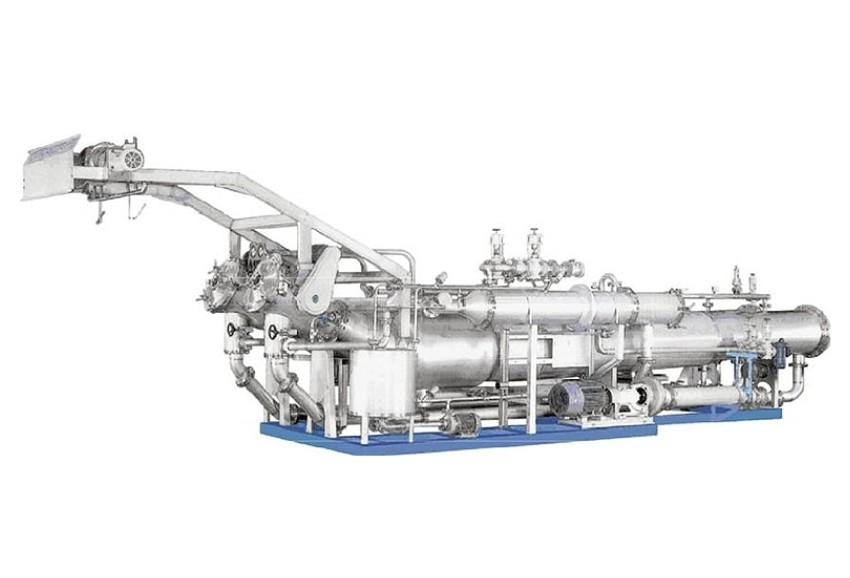
HTHP Fabric Dyeing Machines From Mixc Dyeing
Requirements for synthetic fibers
Synthetic fibers like polyester have a tight molecular structure that resists dye penetration at boiling point (100°C). HTHP machines are sealed vessels that can reach temperatures up to 140°C.
Industrial performance
These machines are essential for any facility processing synthetics. While they consume more energy to heat, they are the only way to achieve color fastness and depth in polyester materials.
Now that we understand the classifications, we can examine the specific machines that populate modern textile mills.
The jet dyeing machine is arguably the most versatile workhorse in the modern dye house.
Industrial working principle
It operates on a rope principle but adds a crucial element: a venturi tube. The dye liquor is pumped at high velocity through a nozzle (jet), which simultaneously dyes the fabric and transports it through the machine. There is no drive reel pulling the fabric; the water pressure does the work.
Key advantages
Because the liquid carries the fabric, there is very little tension. This makes Jet machines ideal for polyester, microfibers, and blends. The vigorous circulation of the liquor also ensures excellent dye penetration and levelness.
Typical production scenarios
Jet machines are standard for athletic wear, swimwear, and fashion knits where the fabric contains elastane.
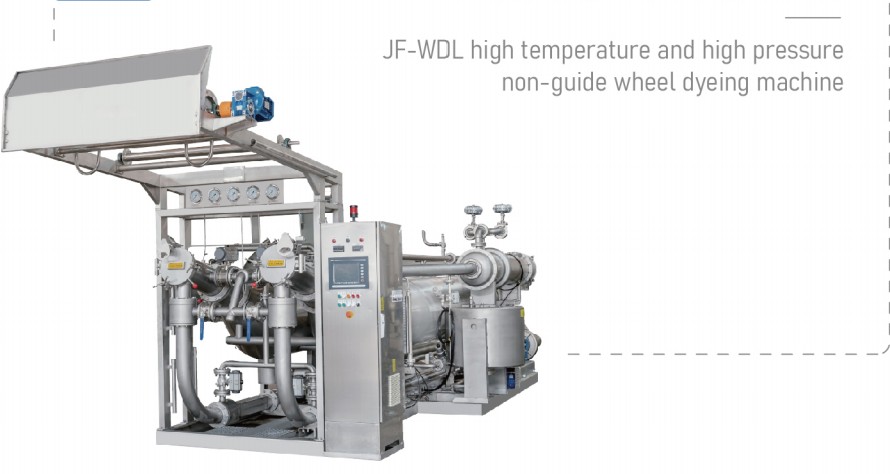
Jet Dyeing Machine at Mixc Dyeing
The Jigger is one of the oldest and most reliable machines for open-width dyeing.
Open-width dyeing mechanism
A Jigger consists of two main rollers. The fabric winds from one roller to the other, passing through a trough of dye liquor at the bottom. Once the fabric has passed through, the direction reverses.
Strengths for woven fabrics
It is excellent for wovens that crease easily. Since the fabric is always flat, crease marks are eliminated.
Cost-efficiency and scalability
Modern Jiggers operate with a very low Material-to-Liquor Ratio (often 1:3 or 1:4). This makes them incredibly cost-effective regarding chemical and water usage. They are scalable from small sample lots to massive jumbo jiggers holding 1000kg+.
Zero-tension dyeing concept
In beam dyeing, the fabric is wound onto a perforated cylinder (beam). This beam is placed inside a vessel, and dye liquor is pumped through the perforations, moving through the fabric layers. The fabric itself does not move.
Application in lightweight fabrics
Because the fabric is stationary, there is zero mechanical abrasion. This is critical for lightweight, transparent fabrics like bridal tulle, voile, or technical textiles used in medical applications.
Quality control benefits
The lack of movement ensures the physical structure of the fabric remains perfectly intact, eliminating pilling or surface fuzzing.
Gentle dyeing process characteristics
The winch is a simpler, older technology where a reel lifts the rope of fabric and lets it fall into the dye bath. It relies on gravity and low mechanical action.
Suitable fabric categories
While less common today due to high water consumption, Winch machines are still favored for woolens and carpets where the goal is to felt or bulk the fabric during the dyeing process.
The golden rule of the dye house is: The fabric dictates the machine.
Cotton is hydrophilic (water-loving) and swells when wet. It requires time for the dye molecules to migrate into the fiber.
Setup: For knitted cottons, soft-flow Jet machines or Overflow machines are preferred to prevent pilling. For woven cottons (like poplin or twill), Jiggers or Continuous Pad Steam ranges are standard to ensure a smooth, flat finish.
Synthetics like polyester, nylon, and acrylic are thermoplastic.
Constraints: They require high temperatures to open the polymer structure.
Configurations: HTHP Jet dyeing machines are the industry standard here. The high pressure allows water to remain liquid above 100°C, facilitating the dispersion of dye into the fiber. Jiggers can also be enclosed and pressurized for woven synthetics.
High-value fabrics require risk mitigation above all else.
Risks: Distortion, creasing, and abrasion are the enemies.
Recommendation: Beam dyeing is the safest bet for ultra-lightweights. For delicate knits that might stretch, modern “Air-flow” dyeing machines (a variation of the Jet) use air instead of water to transport fabric, significantly reducing the weight and drag on the textile.
The selection of a fabric dyeing machine is a strategic decision that ripples through the entire manufacturing process. It is not merely about coloring cloth; it is about defining the capabilities of the production facility.
To summarize, industrial dyeing relies on four main pillars:
Jet Machines for versatility and synthetics.
Jiggers for efficient, flat processing of wovens.
Beam Machines for delicate, high-value technical textiles.
Continuous Ranges for volume-driven commodity fabrics.
As the industry moves toward 2025, the focus is shifting heavily toward sustainability. Machines that offer lower energy consumption and reduced water usage (low MLR) are becoming the standard rather than the exception. For textile manufacturers, aligning machinery choice with both the physical needs of the fabric and the ecological needs of the market is the key to long-term viability. By understanding the mechanical nuances of these machines, producers can ensure quality, efficiency, and profitability in every batch.
Selecting the right fabric dyeing machine is not just a technical decision-it is a strategic investment that directly impacts product quality, operational efficiency, and long-term competitiveness. From Jet and Jigger systems to Beam and continuous dyeing lines, each machine serves a distinct industrial purpose. Understanding how fabric structure, production scale, and process requirements interact with machine design is the key to building a reliable and future-ready dyeing operation.
If you are evaluating fabric dyeing machines for your production line—or planning to upgrade your existing equipment-working with an experienced manufacturer can significantly reduce technical risks and investment uncertainty.

At MIXC Dyeing, we specialize in designing and manufacturing advanced fabric dyeing machines tailored to diverse textile applications, from small-batch customization to large-scale industrial production.
If you are looking for professional guidance, customized solutions, or competitive equipment options, we invite you to contact us. Our engineering team is ready to help you optimize your dyeing process with efficient, reliable, and future-oriented machinery.


