- All
- Product Name
- Product Keyword
- Product Model
- Product Summary
- Product Description
- Multi Field Search
English
Views: 0 Author: Site Editor Publish Time: 2026-01-05 Origin: Site


In the textile industry, the difference between profit and loss often comes down to a single variable: efficiency. While fabric quality is paramount, the cost of production—driven by energy consumption, water usage, and processing time-determines your competitive edge. This is where the choice of Dyeing Machine becomes a critical strategic decision.
For decades, manufacturers have relied on various technologies to achieve the perfect shade and hand feel. Two of the most prominent contenders in this arena are the traditional Winch dyeing machine and the modern HTHP Dyeing Machine (High Temperature High Pressure).
While both machines serve the fundamental purpose of applying color to fabric, they operate on vastly different principles and are suited to different production realities. The winch machine, a veteran of the industry, offers simplicity and low initial costs. In contrast, the HTHP machine represents the pinnacle of efficiency and automation, particularly for synthetic fabrics.
This guide will dissect the technical and operational differences between these two technologies. We will explore their working principles, compare their environmental footprints, and help you determine which machine aligns best with your production goals.
The strategic role of a Dyeing Machine extends far beyond simple coloration. It influences the texture of the fabric, the consistency of the batch, and the overall sustainability profile of the factory.
Textile manufacturers face a trifecta of challenges today:
Quality Control: preventing uneven dyeing, creases, and fabric damage.
Cost Management: mitigating rising costs of water, steam, and labor.
Sustainability Pressure: adhering to strict environmental regulations regarding wastewater and carbon footprint.
Understanding the distinction between a Winch dyeing machine and an HTHP Dyeing Machine is essential for addressing these challenges. A mismatch between fabric type and machine technology can lead to disastrous results—such as attempting to dye polyester in an atmospheric winch machine, which cannot reach the temperatures required for proper dye fixation. Conversely, using a heavy-duty HTHP machine for extremely delicate, loose-knit wool might result in unwanted surface friction.
By comparing these technologies side-by-side, textile companies can make informed capital investments that secure long-term productivity.
The winch dyeing machine, often referred to as a “beck” dyeing machine, is one of the oldest forms of piece dyeing equipment. It operates under atmospheric pressure, meaning the temperature of the dye liquor typically does not exceed 95–98°C. It is designed to process fabrics in rope form, making it a staple for fabrics that can withstand the formation of temporary rope creases without permanent damage.
The defining feature of this machine is its simplicity. It relies on a mechanical winch (a reel) to circulate the fabric.
Gravity-Driven Movement: The fabric is pulled up by the winch and then allowed to fall back into the dye bath by gravity, piling up at the back of the trough before sliding forward.
High Liquor Ratio: Traditional winch machines are known for being “thirsty.” They typically operate with a material-to-liquor (M:L) ratio between 1:20 and 1:40. This means for every 1 kg of fabric, the machine requires 20 to 40 liters of water.
Low Tension: Because the fabric is largely transported by the winch and gravity rather than high-pressure jets, the tension on the fabric is relatively low.
Low Automation: These machines often require significant manual intervention for loading, unloading, and monitoring the dye cycle.
The operation of a winch machine is mechanical and straightforward. A long loop of fabric (or multiple ropes) is sewn end-to-end to form an endless loop.
Circulation: The fabric loop hangs over a rotating winch reel positioned above the dye liquor level.
Immersion: As the reel turns, it draws the fabric from the dye bath and deposits it back into the liquid at the rear of the machine.
Penetration: Dye penetration occurs during the repeated immersion of the fabric in the deep trough of the vessel.
Guidance: A smaller “fly roller” or “jockey roller” is often used to guide the fabric to the main winch reel.
The speed of the fabric is generally slow, approximately 40 meters per minute. Because the dye liquor is stationary while the material moves, the process relies heavily on the length of time the fabric spends submerged to achieve level dyeing.
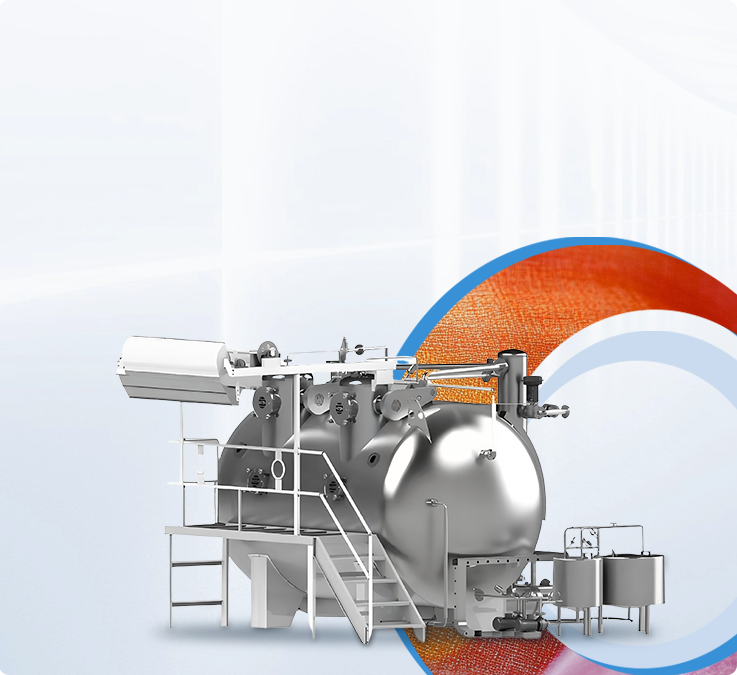
HTHP Dyeing Machine at Mixc-Dyeing
HTHP stands for High Temperature High Pressure. An HTHP Dyeing Machine is a specialized, sealed vessel designed to dye fabrics at temperatures significantly above the boiling point of water—typically up to 140°C. This capability makes it indispensable for dyeing synthetic fibers like polyester, which require high heat to open the fiber structure and allow dye molecules to penetrate.
Unlike the open-air design of a winch, HTHP machines are enclosed, pressurized systems often shaped like horizontal tubes.
Pressurized System: The machine operates under pressure (often 0.9–3.5 kg/cm²), allowing water to remain liquid at high temperatures.
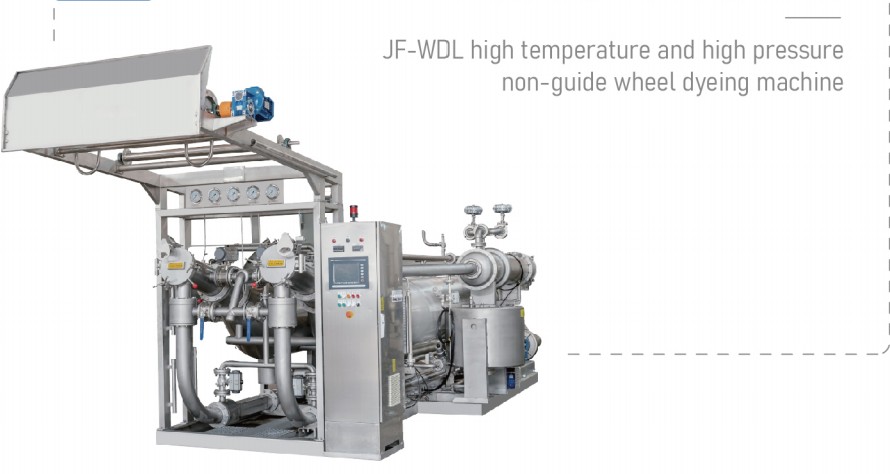
Low Liquor Ratio: Modern HTHP machines, such as the JF-WDL model, operate with very low liquor ratios, ranging from 1:4 to 1:8.
Jet Flow Technology: Instead of a mechanical reel pulling the fabric, a powerful jet of dye liquor drives the fabric through the machine.
High Automation: These machines feature Programmable Logic Controllers (PLCs) that manage temperature ramps, dosing, and cycle times with precision.
The HTHP principle relies on fluid dynamics rather than simple mechanics.
Jet Circulation: A powerful main pump circulates the dye liquor through a heat exchanger and into a nozzle.
Fabric Transport: The fabric passes through this nozzle, where the high-pressure stream of dye liquor penetrates the fibers and simultaneously pushes the fabric through the transport tube.
Temperature Control: Because the system is sealed, the temperature can be raised rapidly and held constant, ensuring even fixation of disperse dyes on synthetic fibers.
Fabric Protection: Advanced models, like the JF-WDL, utilize a “non-guide wheel” design. By removing the mechanical guide wheel, the machine eliminates friction points, preventing scratches and uneven stretching on delicate high-end fabrics.
Comparing these two machines reveals a distinct trade-off between traditional low-cost operations and modern high-efficiency manufacturing.
Winch Dyeing Machine:
The primary advantage of the winch is its gentleness on specific fiber structures. Natural fibers like wool, which can felt or mat under the high turbulence of a jet machine, are often safer in a winch. Additionally, the initial capital investment for a winch machine is significantly lower, making it accessible for small-batch artisans or facilities processing simple cotton knits where water consumption is less of a concern.
HTHP Dyeing Machine:
The HTHP machine dominates in versatility and quality consistency. It is the only viable option for polyester and high-ratio synthetic blends. The jet technology ensures that the dye liquor penetrates the core of the yarn, providing superior color fastness and levelness. Furthermore, machines like the JF-WDL offer a “floating” action for the fabric, which actually results in lower tension than a mechanical winch, despite the high speeds.
To understand the operational gap, let’s compare a standard winch machine against a modern HTHP unit (specifically looking at specs similar to the JF-WDL high temperature non-guide wheel dyeing machine).
| Feature | Winch Dyeing Machine | HTHP Dyeing Machine (e.g., JF-WDL) |
|---|---|---|
| Temperature Range | Max 98°C (Atmospheric) | Up to 140°C |
| Working Pressure | Atmospheric | 0.9 ~ 3.5 kg/cm² |
| Liquor Ratio (M:L) | 1:20 – 1:40 | 1:4 – 1:8 |
| Fabric Speed | Approx. 40 m/min | Up to 600 m/min |
| Fabric Movement | Mechanical Reel (Gravity) | Liquid Jet Flow |
| Automation | Low / Manual | High / PLC Controlled |
| Water Consumption | Very High | Low |
Winch:
Best suited for natural fibers (cotton, wool, linen) and lightweight fabrics that need a “fuller” hand feel. However, the rope form can lead to permanent crease marks (running creases) if the fabric is thermoplastic or heavy.
HTHP:
Essential for polyester, nylon, and spandex blends. The high temperature ensures disperse dyes sublime and enter the fiber. Modern non-guide wheel designs also allow these machines to handle high-end, delicate fabrics (30g/m² to 200g/m²) without surface abrasion, scratches, or pilling.
From a productivity standpoint, the HTHP Dyeing Machine is superior.
Throughput: With fabric speeds reaching 600 m/min, the dye cycle is significantly shorter than the slow rotation of a winch.
Batch Consistency: Automated controls mean that “Batch A” dyed on Monday is identical to “Batch B” dyed on Friday. Winch dyeing often relies on the operator’s skill, leading to batch-to-batch variations.
ROI: While the HTHP machine costs more upfront, the Return on Investment (ROI) is faster for industrial scales due to the sheer volume of fabric it can process per day.
This is perhaps the most critical comparison point for the modern industry.
The Winch Dyeing Machine is environmentally costly. Heating 30 liters of water for every kilogram of fabric requires massive amounts of steam energy. Treating that volume of wastewater subsequently drives up effluent treatment costs.
The HTHP Dyeing Machine is a champion of sustainability. With a liquor ratio as low as 1:4 or 1:5, it uses 80% less water than a traditional winch. This cascades into savings on chemicals (which are dosed based on water volume, not just fabric weight) and thermal energy. For a factory aiming for green certification, HTHP technology is the logical choice.
Choosing the right technology requires a holistic look at your business model.
If your production line is dedicated 100% to wool or loosely woven natural fibers that do not require temperatures above 100°C, a winch machine remains a viable, low-cost option. However, if you process any synthetics, microfibers, or stretch fabrics containing elastane/spandex, an HTHP machine is mandatory.
For boutique dye houses processing small, artisanal lots, the simplicity of a winch is attractive. For industrial manufacturers where throughput and speed are KPIs, the high-speed jet flow of HTHP machines is non-negotiable.
If your clients demand flawless uniformity and high color fastness (especially for dark shades on synthetics), the HTHP machine delivers. Features like the anti-clogging nozzles and internal circulation found in machines like the JF-WDL prevent the defects common in older winch technologies.
If your company strategy involves reducing carbon footprint or meeting international compliance standards (like ZDHC), you must prioritize low-liquor ratio technologies. The operational savings on water and steam alone often justify the upgrade to HTHP within a few years.
The evolution from the Winch dyeing machine to the HTHP Dyeing Machine mirrors the textile industry’s shift from manual craft to high-tech engineering.
While the winch machine holds a nostalgic and practical place for specific natural fiber applications, the HTHP machine represents the future of textile dyeing. Its ability to combine high speed, low resource consumption, and superior quality makes it the definitive choice for manufacturers looking to remain competitive.
Specifically, advanced HTHP iterations like the non-guide wheel designs solve the historical issues of tension and fabric damage, offering the best of both worlds: the gentleness required for high-end fabrics and the power required for mass production.
For textile manufacturers, the decision is clear. Align your technology with your fabric portfolio, but lean towards HTHP solutions to future-proof your facility against rising costs and sustainability demands.

At MIXC Dyeing, we specialize in designing and manufacturing advanced fabric dyeing machines tailored to diverse textile applications, from small-batch customization to large-scale industrial production.
If you are looking for professional guidance, customized solutions, or competitive equipment options, we invite you to contact us. Our engineering team is ready to help you optimize your dyeing process with efficient, reliable, and future-oriented machinery.